
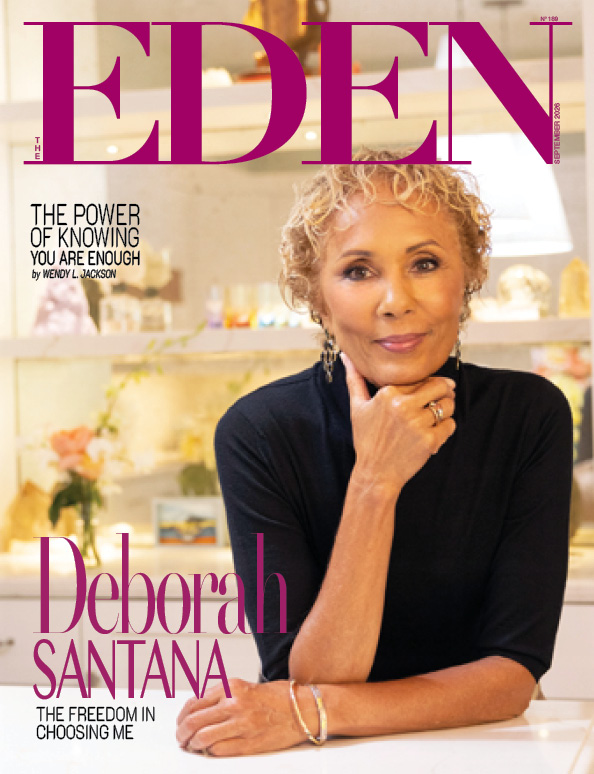
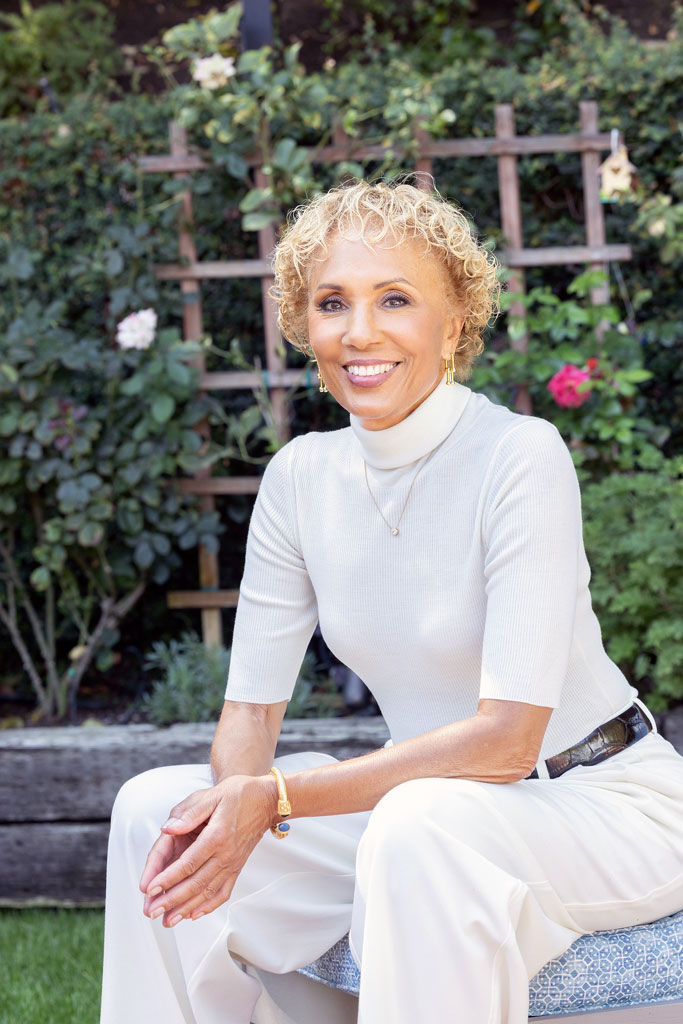
Deborah Santana
A Journey of Grace, Courage & Giving
There are women whose lives are defined by the rooms they enter, and there are women who quietly transform the rooms they enter. Deborah Santana belongs to the latter.
An author, activist, philanthropist, filmmaker, and advocate for women and girls, Deborah has built a life around a deeply held belief: that a meaningful life is not measured solely by what we accomplish, but by what we give, what we awaken in others, and what we leave behind.
The daughter of celebrated blues and R&B guitarist Saunders King, Deborah was raised in San Francisco surrounded by music, culture, and the currents of a changing America. Her father’s artistic legacy, together with the social and cultural landscape of her upbringing, gave her an early understanding of the power of both expression and identity. It was an upbringing that would eventually lead her toward a life of activism and service.
Her activism began in her youth, when she stood alongside others protesting the Vietnam War at UC Berkeley. Over the decades, that early instinct to speak out evolved into a broader commitment to social justice, equality, women’s rights, and human dignity.
Yet Deborah’s activism has never existed apart from her philanthropy. Through Do A Little, the organization she founded, she has created a platform for meaningful support of women and girls, with an emphasis on education, health, empowerment, and opportunity. Her philanthropy is an extension of her personal philosophy that transformation often begins with one intentional act of generosity, one open door, one person willing to make a difference.
She has also lent her support to institutions preserving the history, culture, and voices of African Americans, reflecting her belief that philanthropy is not simply about giving, but about preserving stories, expanding possibilities, and ensuring that future generations inherit a more inclusive world.
There is an unmistakable elegance to Deborah’s approach to life, one that comes not from the trappings of achievement, but from self-knowledge. Her journey has been one of continually finding her own voice, embracing change, and choosing authenticity over expectation.
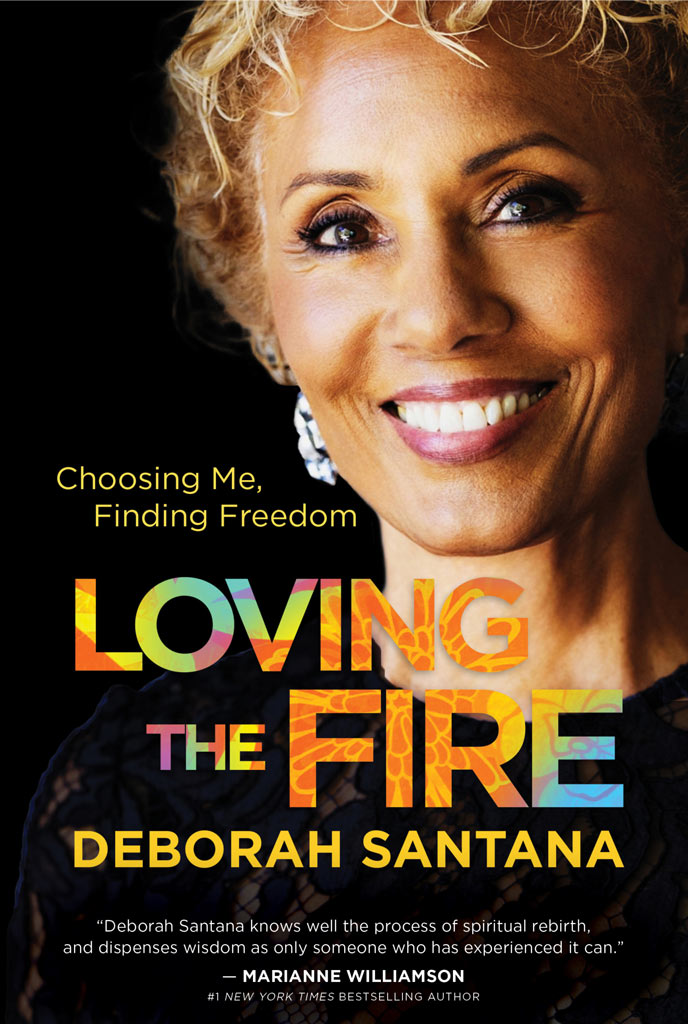
In her memoir, Loving the Fire: Choosing Me, Finding Freedom, she opens the door to that deeply personal journey, a story of love, identity, resilience, awakening, and ultimately, the courage to choose oneself.
In this interview, Deborah Santana invites us into a conversation about the making of a woman beyond the headlines: her father’s influence, the origins of her activism, the meaning of philanthropy, and the quiet power of living a life in service of something greater than oneself.
Your new memoir, Loving the Fire: Choosing Me, Finding Freedom, is such a powerful title. What does “choosing me” mean to you today, and was there a defining moment when you realized you had to reclaim your own voice and identity?
“Choosing me” means being brave enough to live as fiercely as myself as I can. It is such an obvious concept and a natural one, but there were years of my life when I conformed to others’ expectations. I must consistently know who I am and what I believe to live in my authentic expression. In my twenties, I followed a guru from India, and it wasn’t expected that my needs, goals, or desires were at the forefront. The guru told us what was best for our spiritual progress and asked me to open a vegetarian restaurant in San Francisco, and I did. I had dropped out of college to travel with Carlos, and managing the restaurant was a valuable learning experience. I created the menu, hired the staff, and with the assistance of my sister, Kitsaun, built the business for ten years. I took a restaurant management course at UC Berkeley Extension and taught meditation around the world. Leaving the meditation path and the guru’s teachings was the first defining moment when I reclaimed my voice and identity. I realized that no one is more able to connect me with God than my own spirit. I have continued meditating every day since that time, discovering the path to peace begins within.
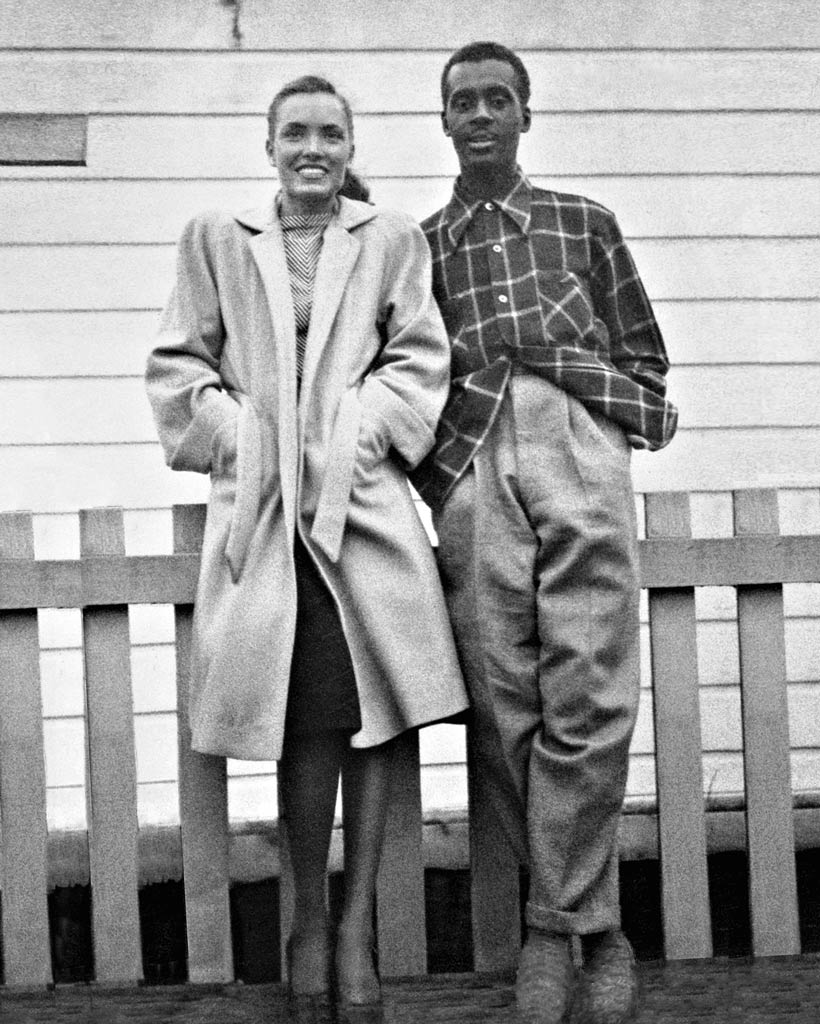
You are the daughter of the legendary blues guitarist and singer Saunders King. Growing up in such a creative and groundbreaking family, what lessons from your father shaped the woman you became?
My father was stoic and unflinching in standing up to injustices. In many ways, I have my father’s personality. The greatest lesson he taught me was to stand strong in adversity. He encouraged me to climb to the highest pinnacle I wanted to reach, and he fiercely watched over me. He loved my mother beyond any love I have seen, and they stood together as equals. Each one shaped me in different ways. My father in his elegant posture and eloquent speech; his firm handshake and looking people directly in their eyes when speaking; his hawk-like attention to everything in the vicinity of our family, and his dedication to his daughters. He played all the great jazz musicians on our turntable: Ella Fitzgerald, Miles Davis, Thelonious Monk, Billie Holiday, Wes Montgomery, Art Tatum, which was a sterling education. My mother influenced me with her faith in God and her friendliness to all. I find myself chatting with the person ahead of me in line at the post office or reaching out to help someone struggling with groceries because this was how Mom lived.
Your parents’ interracial marriage was pioneering for its time. How did witnessing their love and resilience influence your understanding of relationships, courage, and belonging?
I didn’t realize my parents’ marriage had been illegal in California (and in 16 other states) when they married. That information only became available to me when I was a teenager. They never complained of the hardships and racism they experienced, but I sensed Dad’s tension and wariness. Mom and Dad looked out at the world from a position of unity and power. Their relationship was an obvious bond that showed me what partnership meant. Dad stood with his chest out; Mom lived with her heart out and was always courageous in her interactions for us She would fly out our front door.
and stride to the neighbor’s when a parent spoke out of turn to us. When our family walked into a restaurant, heads would turn, and people’s eyes followed us to our table. When Kitsaun and I were teenagers, we loved to turn around and catch people staring at us with their mouths open. We laughed at their narrow-mindedness. But Mom and Dad never reacted to subtle or outright racism. Mom lived her faith in God and loved church, the church that was created by my paternal grandparents, Judge and Sarah King. My parents taught us that we belonged even though society tried to separate people into caste systems by skin color; just the act of my parents’ love defied that system.
The memoir explores your life alongside Carlos Santana during one of the most iconic eras in music history. What were some of the most beautiful and unexpected moments from that chapter of your life?
Actually, Loving the Fire doesn’t focus on our three decades of marriage; my first memoir, Space Between the Stars, delved more deeply into our years together. There were many beautiful moments from those years, especially traveling the world and seeing how people live so differently than Americans: riding the bullet train through country sides in Japan and taking part in a tea ceremony in a temple in Kyoto, taking the elevator to the top of the Eiffel Tower in Paris, seeing the lovely way families stop mid-day and eat a meal together in Italy, the magic of listening as Weather Report sent their ornate music from the stage as stars brightened the night sky in Antibes, France. The children traveled with us every summer, and we often took my parents or Carlos’s parents on the road for a week or more to help. Those were beloved times when we shared the joy of being together on the band bus and in hotels where we went from room to room to visit. They were glorious times of unity, laughter, and love.
Living in the spotlight can be both glamorous and deeply challenging. How did you protect your sense of self while being connected to such a legendary public figure?
We lived in the San Francisco Bay Area, which did not have paparazzi on every corner. This gave me freedom to live my life without the scrutiny of the press. My parents taught my sister and me not to think more highly of people who are famous. Their philosophy was that humans are all created equal and there are those with great intellect, creative talents, and special gifts, but we are all still human. I had dated a famous musician before marrying Carlos, so I was inured to being noticed in public. When we married, Carlos was shy and very humble, not wanting attention except when he played his guitar, and we didn’t live a glamorous life. We had similar spiritual aspirations, enhanced by our daily meditation. My sense of self came from being in harmony with my inner spirit through the guru’s teachings, and later with Bible studies and daily meditation. I felt grounded. The disciple life created a level playing field with other seekers, and I was in a singing group that learned Bengali songs to sing in devotion to God. I wore saris to the group meditations while working in our vegetarian restaurant. It was not difficult to remain humble and connected to one’s inner life while doing these things. My friends were from the meditation center and from my life before Carlos. If I needed to protect our private lives, I didn’t share personal information. My friends all knew me “before,” and valued my heart and my family. My father had been relatively famous as a musician, well-respected and loved by B.B. King and Miles Davis. We heard some stories about Dad’s life growing up and were familiar with famous names.
I also pursued my own interests and studies, taking college courses to learn Spanish (I am still not fluent!), writing courses, and completing my BA in Humanities. I had strong female friendships and connected through a group called Spirit Sisters that gathered monthly to learn from each other.
In your book, you write with honesty about heartbreak, transformation, and liberation. Was there a chapter or memory that was especially emotional or difficult for you to revisit?
It was difficult to revisit the days and months leading up to and after my divorce. It is so far in my past now – 17 years – and I have done so much work to heal, forgive, and reckon with releasing the past. Returning to those memories to write about that time felt dark emotionally. Yet, I couldn’t revel in the joy of my present without revealing how I made the choice to leave, and how I grew each day after that. I have found that, in writing my truth, I have been freed from trauma. Releasing my position as COO and Vice President of Santana, as well as leaving the Milagro Foundation that we both founded, was transformative. Who was I without those titles? I learned to be tremendously kind to myself during that time of growth and transformation.
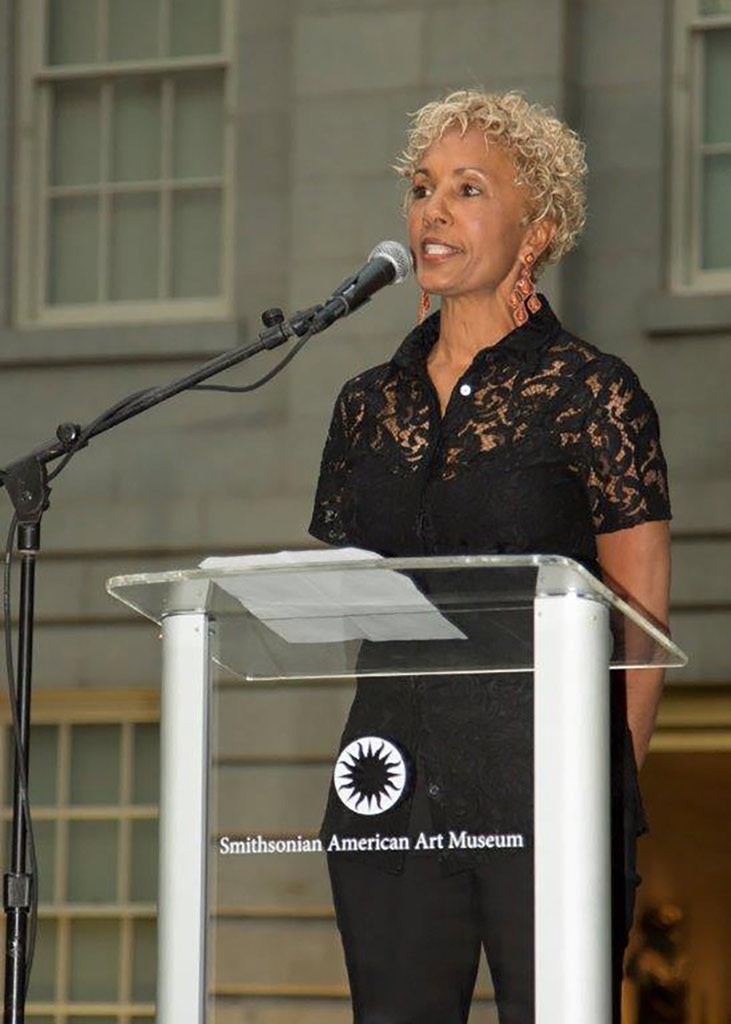
Spirituality has always played a significant role in your journey. How has your understanding of spirituality evolved through love, motherhood, loss, and healing?
I have had a very inspiring spiritual journey. I was raised in two churches. One was my family’s Pentecostal church in Oakland, and the other was Our Savior’s Lutheran Church in San Francisco. They are both very different in their expressions of worship. My childhood friend Karmen was Catholic, and many times we walked to St. Emydius Church in our neighborhood to sit in prayer. I loved the silence, the holy water to tap onto my forehead, and the fragrance of candles in the sanctuary. My understanding of spiritual truth has changed from listening to church sermons or gurus tell me how I should be and has evolved to connecting with my highest self in the peace and silence of meditation. Patriarchal systems of worship have long excluded women as leaders and have left out the sacredness of cyclical life, of nature and our natural environment, of the possibility to transform ourselves, and the belief that energy and consciousness are infinite. I didn’t grow up understanding the indigenous wisdom of First Nations people and have studied and tried to respectfully bring into my own life a love for Mother Earth and Father Creator. This oneness with spirit carries me each day, and I continue to learn from great seekers. Through my challenges, I have learned to sit with discomfort, with not having my way, with people’s choices that sometimes caused me pain. At the end of Loving the Fire, I write: “Life brings suffering; the root of survival is courage. Bend with the pain. See the light behind another person’s cloud.”
Motherhood is often transformative. What did being a mother teach you about strength, forgiveness, and unconditional love?
Motherhood taught me flexibility. I am a natural planner and desirous of order. That’s why I loved managing the restaurant, my part of the band’s business, and my own life. However, with motherhood, all of that changed. The first bits were with my hormones when I was pregnant – being controlled by my body rather than me controlling my body was a shock! I loved being pregnant – feeling the baby grow and beginning to feel unconditional love in the process. I birthed three beautiful souls, each a unique individual. Each one taught me something new. Strength is the quality I needed from the very beginning. When I was in a very long labor with Salvador, I remembered when, at one point, I had run the New York City Marathon in my twenties.
I told myself that if I could run 26.2 miles, I could birth this baby. Unconditional love for each little one is a bit of a miracle. It is a gift to parent children from a heart of love, and my parents had been stellar models of love, so I learned that from them. I can’t remember a time I needed to forgive one of my children. I wanted them to be obedient, to do their best in school, and to excel with their creative talents. There were many times I needed to forgive myself for yelling at them to get them in the car to go to school or rushing them to complete a task. It’s just not valuable to make children conform to a rigid Western system of success. My children have taught me that learning continues to occur at each stage of life.
Your story is filled with reinvention and empowerment. What advice would you give to women who are afraid to leave situations or identities that no longer serve them?
In the Dhammapada, Buddha writes, “If the traveler can find a virtuous and wise companion, let him go with him joyfully and overcome the dangers of the way. But if you cannot find a friend or master to go with you, travel on alone, like a king who has given away his kingdom, like an elephant in the forest.” Living true to our own nature and purpose takes tremendous courage. For anyone afraid to leave their current situation for whatever reason, I ask that they sit in silence, breathe deeply, and listen for their true essence. Some people can accept where they are in life and make the most of their situations, but I believe that change is a significant part of growth and that we are here to become our best selves for our highest good. At the end of Loving the Fire, I include two pages of How to Walk Through Fire, listing steps I took to move on from what no longer served me. The first step was to acknowledge my life was out of balance with my soul’s purpose. Next, I sat in silence and prayed for guidance. I journaled, letting my thoughts spill onto a blank page. I created a vision board with what I wanted to bring into my life. I acknowledged who was toxic to my growth and moved away from them. I acknowledged who brought light to my life and brought them closer. Who would support me in the changes I wanted to make and believed I could move forward? This is key to reinvention and empowerment. One must envision there is pure light at the end of the tunnel.
You have lived through extraordinary cultural and musical moments. Looking back, what was one unforgettable experience from the music world that still makes you smile today?
In October 2006, our family was invited to South Africa to celebrate Archbishop Desmond Tutu’s 75th birthday with the activist organization Artists for a New South Africa, where I served on the Board. Nelson Mandela attended the gala dinner in Johannesburg and publicly urged the Arch to “continue to be our voice of conscience.” Johnny Clegg and his band performed his well-known anti-apartheid anthem, “Asimbonanga,” and Mr. Mandela stood to dance. To be in the presence of the greatest South African leaders/freedom fighters and listen to this beautiful song is an unforgettable blessing.
Your life has been surrounded by incredible music, culture, and creativity. What song instantly lifts your spirit no matter where you are in the world?
There are so many. Music touches my nerve endings and my heart and radiates memories. What lifts my spirit one day can change the next. I love my daughter Stella Santana’s single Golden with Avi Snow. It always makes me smile. India Aire’s Video is eternally uplifting because it resists society’s attempts to homogenize women in a beautiful, poetic, rhythmic voice. Salvador’s composition Rise Up inspires everyone to make it through every challenge. Aretha Franklin’s I Say a Little Prayer for You makes me dance.
You traveled to so many beautiful places throughout your life. Is there one destination that feels most like “home” to your soul?
I have a chapter in Loving the Fire about my journeys to Kenya. There is a sweet familiarity I feel with the red soil, the musky dry air, the acacia trees standing stark on the land. The smiles of people walking on roads, picking tea leaves on verdant hills, of the children laughing as they run to school, sometimes in their older siblings’ passed-down uniforms, of the camels slowly turning their heads to watch as our car zooms by. Africa feels like home to my soul in a vibrating acceptance of who I am. It is the home of all humanity, the birthplace of the earliest humans 300,000 years ago. It is a continent I have only visited thrice, but whose essence is a breathing aliveness that thrums like the footfalls of a herd of elephants.
Please share one backstage memory that always makes you laugh.
My joys have always involved experiences, insights, and times with my children. They bring laughter to my heart and lightness to my life. When Salvador was in high school, he was playing the bass drum in a band concert. He stood behind it with a mallet to strike at just the right beat, and when he did, the drum bounced off its stand and rolled on the stage for a bit. The look of surprise on Salvador’s face was priceless, and I began to laugh uncontrollably. The drum bounced once, Salvador caught it and returned it to its stand, continuing to be a part of the song. I’m not sure the conductor even noticed. There is a chapter in Robin Wall Kimmerer’s book Braiding Sweetgrass titled A Mother’s Work. She writes, “I wanted to be a good mother, that’s all, like Skywoman, maybe.” Skywoman Falling is the mythic story of a woman with a duty to safeguard life. This has been the joy of my parenting, of being the best mother I could be as a safeguard and believer in my children.
After readers finish Loving the Fire: Choosing Me, Finding Freedom, what is the one feeling or message you hope stays in their hearts long after they turn over the final page?
I hope readers take away the message that they have a purpose in this life. I mentioned earlier the challenge of writing about the times before my divorce from Carlos, but now that I’m speaking about what I’ve gained, I only have gratitude for how much I’ve grown. There is a beautiful song by Bebe Winans called Stand. I remember belting that song out as I hiked alone on Mt. Tamalpais, believing I just needed to stand and allow the Holy Spirit to do the work. I named my youngest child Angelica Faith, and faith has been a deep root of my life. In writing Loving the Fire, I explain how the strength of my ancestors and the power of my spiritual faith empowered me to transcend negative experiences with love. When readers finish the Epilogue and look at the final collage of my ancestors, I hope they feel ready to stand in their lives with courage.

Comments