
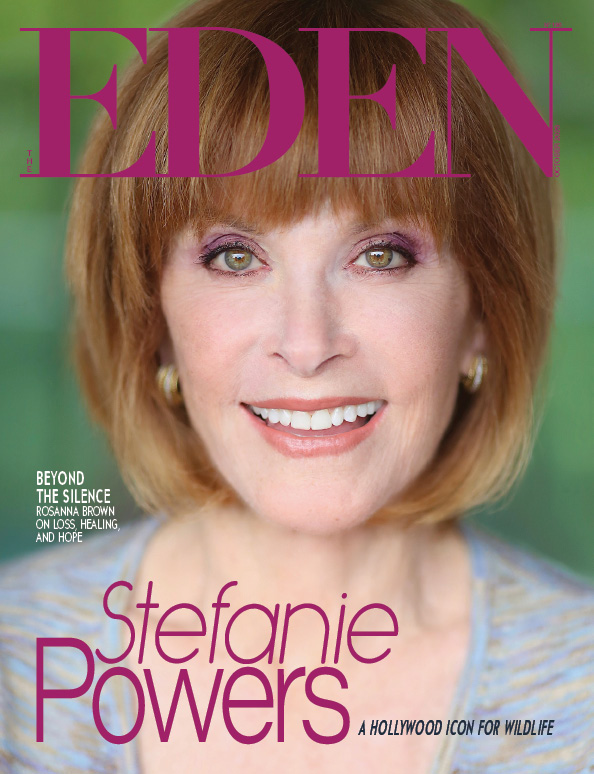
Stefanie Powers
A Hollywood Icon – A Lifelong Champion for the Wild
Some people’s lives seem to belong to the screen, while others become something far greater than the roles they have played. Stefanie Powers is both.
For generations of audiences, Stefanie has been recognized as one of television and film’s most elegant and enduring stars, bringing intelligence, sophistication, strength, and unmistakable presence to every role she inhabited. But behind Hollywood’s glamour lies a deeply personal journey, rooted in her lifelong love of animals, nature, and the extraordinary responsibility we have to protect the world we share.
Her connection to the natural world began long before her name became synonymous with Hollywood. Growing up around animals, including on a stud farm, Powers developed an early understanding that caring for living creatures is not simply about loving them. It is about responsibility, stewardship, and respect.
That philosophy would eventually become one of the defining missions of her life.
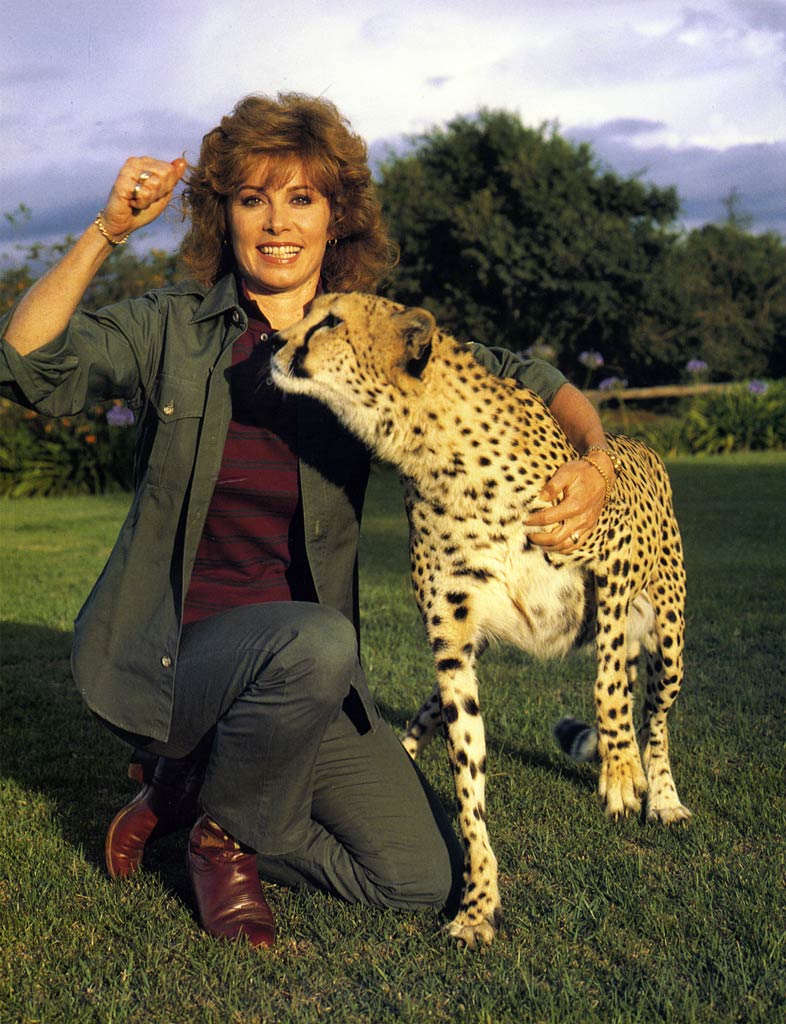
From advocating for wild horses to championing endangered species and supporting wildlife conservation, Powers has devoted decades to giving a voice to creatures that cannot speak for themselves. Her conservation work has taken her far beyond the Hollywood spotlight, including her efforts on behalf of jaguars and her leadership with the William Holden Wildlife Foundation, created in memory of her great love and fellow conservationist, actor William Holden.
What began as a personal commitment has evolved into a broader vision of conservation, one that recognizes that protecting wildlife also means protecting the ecosystems and communities that sustain them. Through education, habitat preservation, regenerative agriculture, and conservation initiatives in Africa and beyond, the Foundation continues to carry forward a powerful message: when we protect nature, we protect our own future.
Her commitment to creating positive change has also earned international recognition. In 2024, Stefanie received the Agents of Change Award from Vision for The Future, honoring her work with the William Holden Wildlife Foundation and her ability to inspire others.
That legacy will continue to reach new audiences through the forthcoming book Vision For The Future: Capturing Inspiring Stories from Leaders and Changemakers, in which Powers will be featured alongside an extraordinary group of individuals dedicated to making the world a better place. Her inclusion is a fitting recognition of a life in which influence has extended far beyond entertainment, to conservation, education, philanthropy, and the protection of our planet.
This year, Stefanie Powers was also honored with the Ms. Wonderful Award from The Thalians, adding another distinction to a remarkable career of achievement and service. The Thalians have a celebrated history of honoring prominent figures, including Bob Hope, Doris Day, Carol Channing, Frank Sinatra, Carol Burnett, Whoopi Goldberg, and Ann-Margret.
For The Eden Magazine, Stefanie Powers embodies the essence of living with purpose. Her story reminds us that beauty is not merely something we see; it is something we protect. That influence is not measured only by fame, but by what we choose to leave behind.
Today, Stefanie Powers continues to use her remarkable voice and platform for something larger than herself: a future where wildlife can remain wild, where communities can thrive in harmony with nature, and where the next generation understands that the Earth is not simply ours to inhabit; it is ours to steward.
In this exclusive conversation with The Eden Magazine, Stefanie Powers reflects on her extraordinary journey from Hollywood to conservation, William Holden’s enduring legacy, her profound connection with animals, and why protecting our natural world may be one of the most important roles any of us can play.
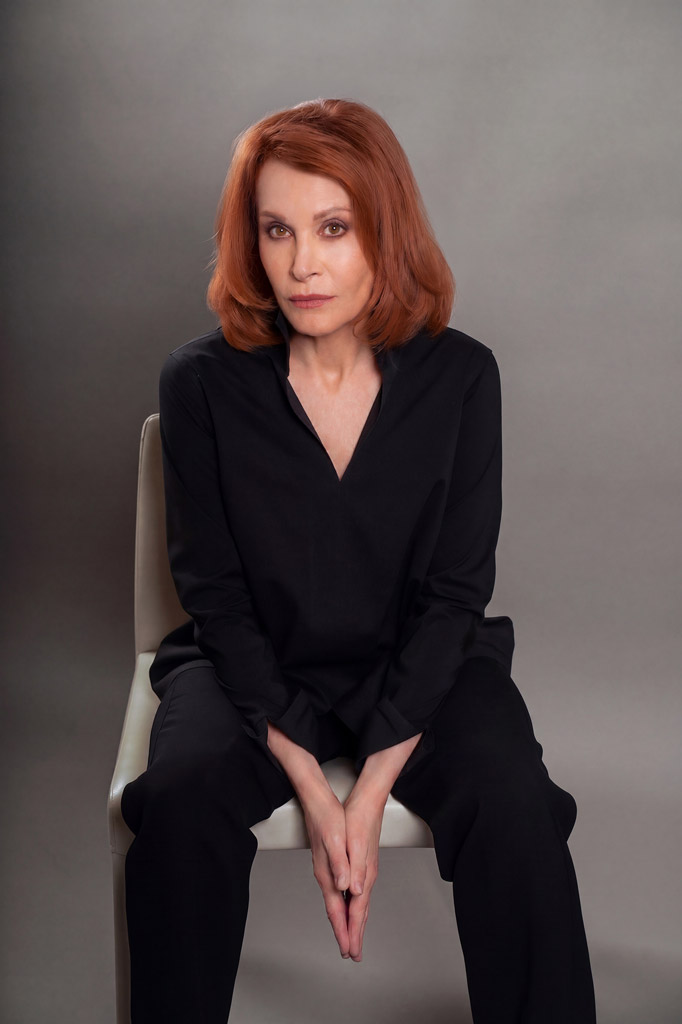
Last year was the 45th anniversary of the William Holden Wildlife Foundation, a 501(c)(3) public charity. As the founding president of the William Holden Wildlife Foundation, what were the biggest challenges you faced when turning a vision into a sustainable, long-term conservation effort, and what has been the most rewarding?
The most challenging part is always the money. You start with a vision. My vision was based on Bill’s vision because Bill was very much a visionary. He created it in 1959, the first game ranch for the preservation of species in East Africa, and possibly in Africa at the time. In 1959, most people didn’t have the word “conservation” in their vocabulary. Let alone the concept of extinction. We were still operating under the ludicrous idea that all resources were endless.
Only a few people were writing extremely important books and papers about eventual pollution and what it would do, and people laughed at them. I recall that when my first husband, actor Gary Lockwood, was working on the movie 2001: A Space Odyssey, I spent an awful lot of time on that set because it was the most fascinating place in the world. There were all these inventions going on that also magnetized an entire generation of scientists who had not seen any theories of the apparatus that could be installed on spacecraft or put into visual form. Stanley Kubrick was inventing it in ways that no one had attempted. It’s hard to realize that when you see the movie, cellphones and microcircuitry didn’t exist. None of the things that are illustrated so vividly in that film existed. They weren’t even on the drawing boards.
Even Arthur C. Clarke was on the set of 2001: A Space Odyssey. This made it even more fascinating for me to have him there because he was a scientist in his own right and was deeply involved in the early stages of the space program, but then became a science fiction writer. He told me there was a kind of defense mechanism against the fact that he and other scientists had met to announce their findings of the compromise that our environment was undergoing, and that it would, in very short order, be experiencing. So they held a meeting of these scientists, a conference in the Caribbean, to announce what they thought would be a gift to the world: all their findings, which included the eventual pollution of the sea and the eventual pollution of our waterways, and they were laughed at. They were called eggheads for coming up with these silly theories. And, of course, everything they announced has come true and is coming true with alacrity. It was extraordinary to be in his company and learn from him as much as I could in those brief moments we were able to talk while on set.
What has been the most rewarding part of your conservation efforts?
The mission statement of the William Holden Wildlife Foundation is “Wildlife conservation through education and alternatives to habitat destruction, all through education,” which was the whole purpose of building an education center that Bill had in mind for local people. This is not a tourist operation, but rather a place where they can realize the wealth in their hands to preserve, and how important it is not only to the future of the planet but also to the environment they inhabit and hope their children can inherit and prosper in. So, unless that point is clearly made to the local population in a very dramatic way, it won’t be absorbed.
I think, unfortunately, our education systems have dropped so much of the education we desperately need to impart to younger populations as they grow up. They won’t have the quality of life we knew at their age. They need to know why, what they could have done, what their parents could have done about it, and what they can do about it. We don’t want to diminish the idea that we can affect things and do something about them, even through a single effort. Because it is all about our choices.
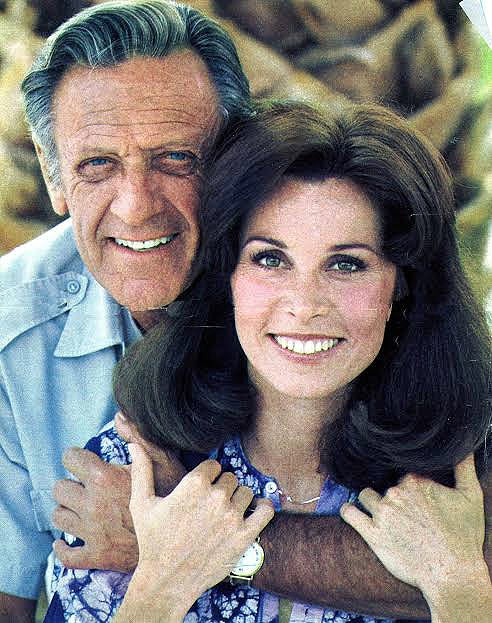
How can today’s advancements in technologies, virtual reality, wildlife documentaries, visits to animal sanctuaries, and immersive digital experiences help shift the way we educate the public about animals without, let’s say, keeping them in captivity?
It’s all of the above. Those are all important to ensure that they’re all part of the education system. The whole notion of rolling up your sleeves and saying, “I’m mad as hell, and I’m not gonna take it!” – (A famous line from Network, another movie Bill was in, and so relevant today.)
I think one of the principal things we forget we’re responsible for is putting a mirror up to ourselves. What we consume, how we consume it, and how we dispose of it. We need to make the suppliers of the goods we buy responsible for providing materials that can be recycled.
How about making Apple® responsible for creating all these wonderful new products we have to buy, including new plugs to plug into the wall, because the old ones won’t work with the new ones? How about making them all out of recyclable materials? If you make them out of recyclable products/materials, and you are forced to do that by the consumers, we do have the possibility of organizing ourselves and putting pressure on Apple, for one, which is not only a monopoly, but it is one of the richest corporations in the world. They should be responsible for the products they make to ensure they are healthy and safe for the environment. Make them responsible for the pollution that ends up in landfills. All that stuff doesn’t disappear. It just disappears from your view. So then, how about we choose to buy clothing made from biodegradable materials instead of the so-called miracle fabrics that will be in a landfill for 1,000 years?
How has your personal relationship with William Holden influenced your approach to this work that you’re doing now and have been doing?
Bill was the most influential person in my life. We had a lot of the same curiosities, and we loved to travel. I guess you could say we liked going on expeditions, and it wasn’t exactly adventure travel, but it was in a sense because we were going down rivers in Papua New Guinea and digging things out of rocks and all sorts of things. We were both insatiably curious about other places, other people’s lives, and other cultures. But most particularly, the natural world. I shared that curiosity, and it was a sort of marriage made in heaven. And so, his experience was obviously influential to me, and the fact that I had somebody to go off on these interesting expeditions with was fabulous. We did an awful lot of jungle work in numerous jungles, and I got a lot of bites from indescribable insects. But it was great. I recently spoke with a dear friend I’ve known since childhood, who was also a documentarian and had taken on many projects for National Geographic. We were talking about some of the places we had both been to, and that I had been to with Bill, that you can’t go back to anymore because they’re either too dangerous or the environment is compromised. For example, the parts of Indonesia where the indigenous species include one of our closest genetic relatives, one of the great apes, the orangutans; those jungles are being raped and pillaged to such an extent that the environment, the habitat that’s left, and not just for the orangutans, but the whole biodiversity, is disappearing. You cannot walk through those jungles, those once-beautiful bush areas, without hearing the sound of a saw, whether it be done legally or illegally. They are cutting down forest habitat and planting the largest cash crop they have, palm oil.
Palm oil is terribly toxic to the environment. The only way you can get rid of them occasionally, because you must, since these trees don’t produce for too many years, is to burn them.
When they burn, the fires are huge, and thousands of islands in the affected area are blanketed by toxic smoke. In places like Borneo, Indonesia, Sarawak, and similar areas, you cannot fly over them because the smoke will choke you and be deadly to the plane. When fires burn palm oil plantations in Indonesia, they must close the airport in Singapore because what is floating in the air is basically poison.
What are the most urgent conservation challenges facing wildlife?
It’s all to do with habitat because human-animal conflict is over habitat. In Kenya, about 60% of the population lives in rural areas, and that share is growing. Therefore, you need land to plant vegetation that produces food. But the food, the production of it that has been going on in the Third World for decades, has been based on chemical fertilizers and pesticides. These are just as toxic to human beings as they are to the natural world. And on top of that, there are genetically modified seeds.
A lot of people ask me, “With so many needs and so many areas of the environment and of wildlife conservation, where should I focus?” I always suggest that people focus on what they’re most passionate about because that’s what will drive their dedication, and because it shows they can do something about it.
When it comes to agriculture and the environment, we can do a great deal now. Part of that is being embraced in countries that have over-chemicalized their farmlands, realized they’ve burnt them out, and now have to find ways to recover them. The sources of that recovery are in regenerative agriculture theories. Not just agriculture, but the
regeneration of the soils that support that agriculture, because the toxins go deep.
If you ask the average person, “What is your definition of organic food?” Most people will say they don’t use chemical fertilizer, and they don’t spray with chemical sprays. But that’s a tiny part of it. It’s also what’s in the soil because these chemicals are pervasive.
They’re absorbed into the soil, and the water that irrigates them goes as deep as it can, which isn’t deep enough, but it carries the toxins lower down. If you think about it, most agricultural fields are only about 12 to 14 inches deep. But what’s underneath that is what we’re worried about, because it’s been affected over the years. It’s not a host area for the kind of biodiversity that creates life. Fungi, bacteria, nematodes. The list is long, and it needs help regenerating. It needs help with reintroduction so it can do its job of
carrying nutrients to the very plants we’re trying to use as our own nutrition.
It is also important that we do not use GM seeds. One could say, “Oh, well, we’ve modified seeds, since time immemorial.” Yes, we have. But that’s called hybridization. Hybridizing plants to withstand harsh conditions is future science. We need to keep adapting to a drying world because it is a drying world. We have assisted in that drying by cutting down as much of the environment as possible. We have assisted in the mission of providing food for as many people as possible, but at the same time, destroying the very habitat, the very trees, and brush that provide us with the one mechanism that makes this planet glorious and unique in all the solar systems we’ve discovered, and that is that we can make oxygen.
Our plants can make oxygen, so every time we tear one down, we’re not strengthening ourselves.
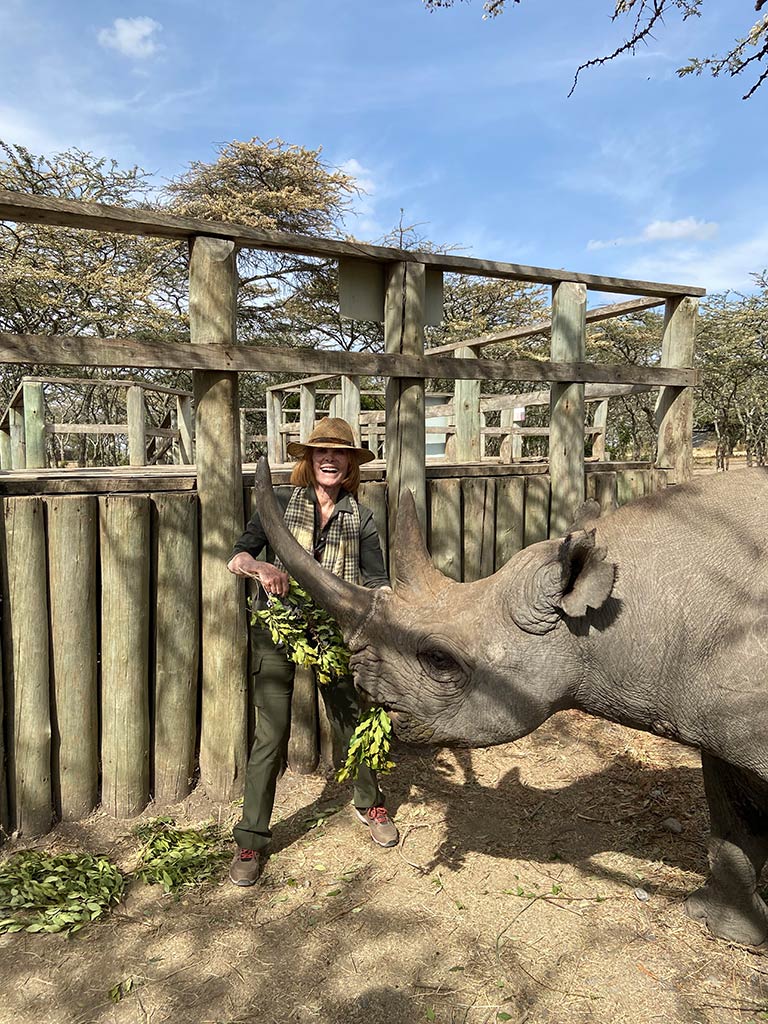
How do tourism and conservation intersect?
I think people are a little more aware of their consequences. Although I don’t know whether the great industry of these enormous boats with thousands of people, tourists traveling on them, touring all over the world, has been held accountable for the garbage they throw into the sea.
I recently spoke on a Turner Classic Movies cruise and asked the people who provided the ship about the garbage. They assured me that when we were in port, they separated biodegradable materials from non-biodegradable materials. And as for what happens in our toilets, I’m not sure how they handle that. But there are methods we use in Kenya to degrade bacteria and the biology of fecal matter, making it possible to sterilize it. Which is like making good, responsible compost that has enough ingredients in it, of the biodegradable nature, of the natural way that the natural world biodegrades itself, and that we can use it. If you go back in history, you can see that in Chinese culture, as far back as anybody can remember, every village had what they called a night soil collector. Every house had a potty where they did all their business. The night soil collector would collect it in the morning.
It’s been in existence for a very long time. When you think about how we process waste, it’s not too far from the sophisticated ways we can process it today. Enlightened people worldwide are dedicated to cleaning up the waste we produce and using it productively.
Degrading fecal matter. We do it to a certain extent at our education center. It’s biofuel, and we can produce electricity and nighttime lighting from the off-gases produced by degrading the biological material. For every point of issue, there are people who have been doing groundbreaking work, and others who’ve been doing work that’s been in our world and in the survival mechanisms of human beings for a thousand years or thousands of years.
What partnerships or collaborations have been the most impactful for the foundation?
It’s all about education. Education is a process. As I mentioned, the foundation’s mission is wildlife conservation through education and alternatives to habitat destruction. So, in the first trench, we are at the education center. Last year, we hosted about 16,000 students who came to us for free. Some stayed three days, others overnight, and some just for the day. They come with their own educators. We also have courses they can take with them. We keep track of the people who visit us time and time again. We try to keep it fresh for them and their age group.
We also have seminars for adults. With the second part of that mission statement, we formed alliances with universities. Our first university alliance was with Jomo Kenyatta University in Nairobi.
In their microchemistry department, every year a group of students comes to us from that division and works mainly in our laboratory, investigating how we make this hot compost, what changes occur in the soil from the samples we start with, and what it’s like when it’s finished. Much of the real purpose of making this high-quality compost is to reintroduce organisms into land that has been devoid of them or has been abused. The preparation of that land is one thing; the introduction of the biodiversity that will begin to self-propagate is the other. That’s what a lot of this abused land needs because sometimes all this abuse destroys a layer of topsoil so that there’s nothing much to plant in. The topsoil that provides all these nutrients kind of has run away. Once you create a desert, it’s hard to recreate the land it took to create the desert. It’s either from overgrazing or poor farming techniques. We have an outreach program that works with schools we’ve rebuilt and some we’ve built from scratch in seven areas that are mostly drivable in a day, in multi-tribal rural environments. We build gardens attached to those schools. These gardens help provide the school and its students with high-quality food and lessons in how to grow it. And what we’re dealing with when we deal with land that is being rehabilitated.
It’s a very important message and lesson in how the land degrades and what you need to do to put it back together. It’s all about that. That’s what we’re trying to do. And to do that, we need the funds to make it happen.
How can people get involved?
We have a website.
We have projects listed there that we love. We especially like it when our donors become involved. We keep close track of our donors and have very close contact with them. We want their involvement. We want their participation. We have sponsorship programs for students in rural areas who are highly impoverished and need help to attend secondary school. In the last three years, 38 students have transferred through our system from grammar school to secondary school and are now in colleges or training/trade schools. Because, once again, as in many countries around the world, even in the developed world, we have a young population that is not going through training schools because they see it, in some way, as a lesser education. But it’s not.
We have to get away from that mindset. We don’t all need to go to university to study how to use a computer. We do need to find out what we’re going to be useful at doing. Because that usefulness might provide you with a better income than having another degree that everybody else has.
What would you like the public to take away after visiting a zoo?
I used to be on the board of four different zoos. Each of those zoos was conscientious and involved in species revival programs and in the captive breeding of species that were becoming extinct in the wild. The zoo now plays a crucial role in preventing species from going extinct because we have the technology, through genetic introduction, to transfer embryos
created in laboratories from extinct species into similar species. I’m speaking in particular about the northern white rhino, whose embryo can be made from genetic material in a lab and then transferred into a host female of a non-extinct rhino subspecies, such as the white rhino. The idea is that a northern white rhino might be able to be born because we’re doing that with other species.
We’re very much involved with embryo transfers. I’ve been involved with embryo transfers for years. I worked at the Cincinnati Zoo, which had the Center for the Reproduction of Endangered Wildlife, headed by Dr.
Betsy Dresser. She was a pioneer of embryo transfers in endangered species. I was with her on several occasions when we performed embryo transfers from the East African bongo, a highly endangered medium-sized antelope.
There are some very healthy bongo populations around the United States. I also served on the board of the Los Angeles Zoo. We together had a project that was funded by Cincinnati and cooperated with LA to superovulate some female bongos in their breeding programs at Cincinnati Zoo and transfer them into host females of a different species, in the same genus but a different species called an eland, which is the largest antelope species. We’ve transferred eleven over the years, and seven have been born to these eland females. There’s no genetic interference whatsoever.
Once they’re born, where do they go?
They will go back to captive breeding programs because most endangered species are not able to go back to their country of origin since those habitats are either being destroyed or human populations have taken them over. Until human beings start realizing that they must share this planet with other species and do something about it, they will never be returned to the wild, if there is any wild left.
We humans, as a species, have to decide to protect, support, and help maintain national parks throughout the world, where flora and fauna can coexist, including species that have been driven to near extinction by our activities.
It should humble us to understand how fragile our planet is, and how much of it has been destroyed due to human activities. Is it not therefore our responsibility to try and restore as much of the damage as we can?
Besides your passion and commitment to your work with the foundation, your acting career, singing, and work as an author, what else continues to inspire and energize you?
Just about everything. I’m insatiably curious. I want to know about everything. I want to read everything. I want to attend every performance. There aren’t enough hours in the day.
I’m very lucky to have access to wonderful information and wonderful minds. That’s what keeps me going. It’s less about me since I don’t find myself as interesting as other things that I want to know about.
I have a great friend who works at JPL (Jet Propulsion Laboratory). She’s on a trip right now. But I’m longing to have her back here so we can talk about all things space.
There are so many wonderful things to know, discover, and get involved with in some way, even just intellectually.
In 2012, you did a one-woman show. Do you have any plans to do another one-woman show anytime soon? Maybe an evening with Stephanie Powers?
A couple of people have mentioned that. But as I said before, I am less interested in myself than in seeing some of our projects at WHWF come to fruition.
How has your perspective on fame and success changed over time?
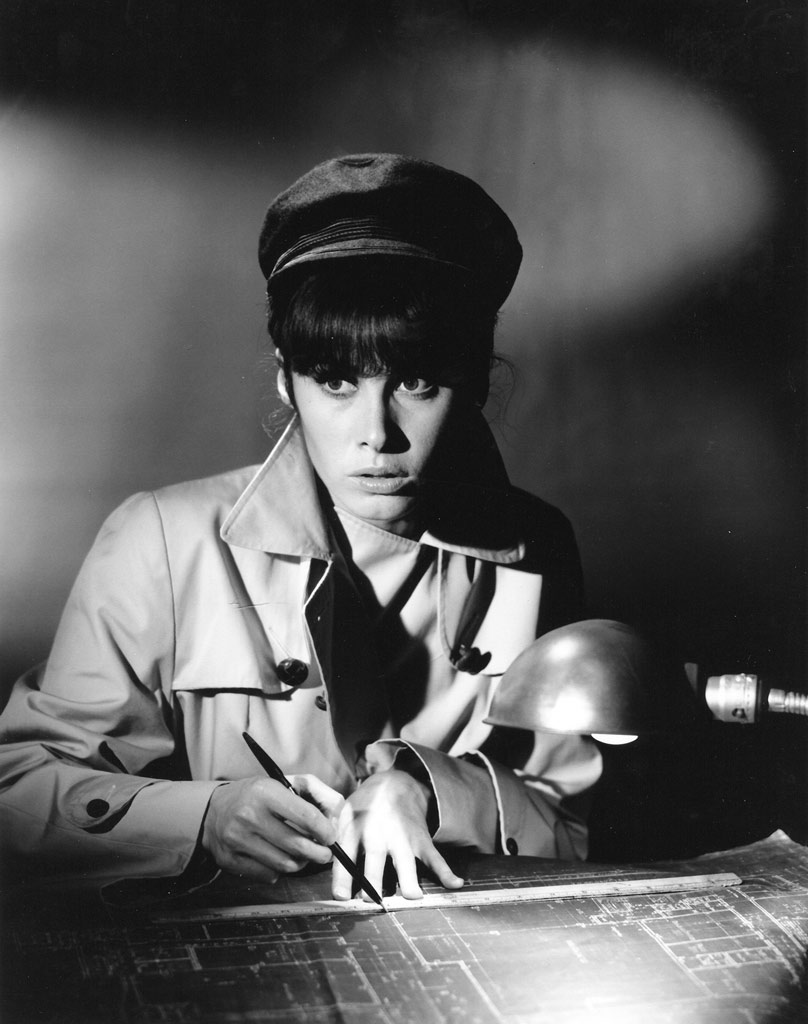
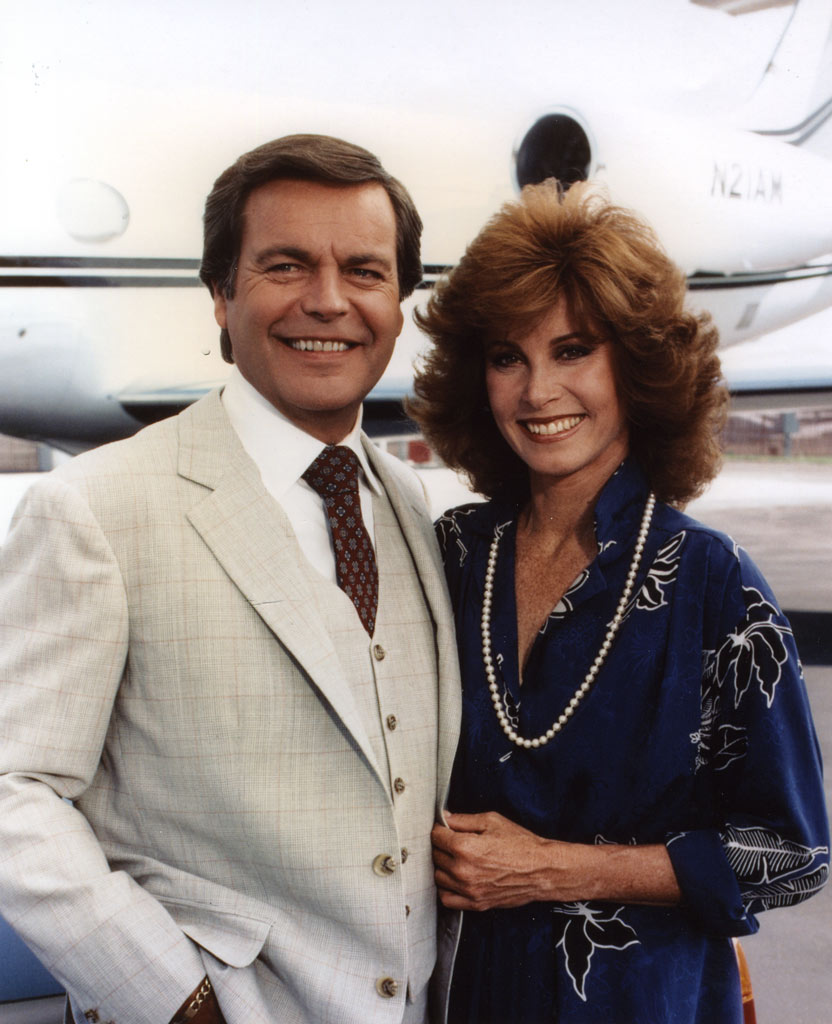
It’s a very different business now. I look at the obstacles and challenges young actors face now, and I don’t know that I have the heart for it or the tenacity, because there’s so much rejection. I don’t know that I could have tolerated it today. It’s a challenging world. When I was 17 years old and under contract to Columbia Pictures, they ran my career. They ran every aspect of my career for five years. And then they sold my contract to MGM Studios to do a television series called The Girl from U.N.C.L.E. All of that happened during a period when there were only three networks. NBC, ABC, and CBS. The studio system owned, or at least controlled, most cinemas. And it was very much a thing where people went to the movies. But it has all changed. People used to socialize by going to the movies. They got out of the house, they’d go have a little meal, and then it was “Let’s go to the movies.” Now, we see movies at home. That automatically creates a completely different experience. And not only do we see them at home, but we also see them on a huge television set that we can buy to cover the wall. And we can make our own popcorn, and we can do all of that by ourselves. So, there’s that sociability that is just not there anymore.
It’s sad because we had little things we looked forward to. Now people are very solitary, and I think they’re very lonely because the ability to communicate verbally is quickly being lost.
Is there a role that you’re itching to do in either theater, film, or television?
I’m always involved with some kind of project. I’m a history buff. I think we need more history to learn from so we can learn about each other. Chinese history is one of the most fascinating things you can study. So much is now available in archives that are accessible through National Geographic, as well as previously unavailable archives. It’s fascinating to gain an understanding of that culture and the 1,000 to 3,000 years going back and to learn from it and see how it manifested itself. We’re used to looking at the ancient Greeks, ancient Romans, and, of course, ancient Egyptians. But when we start looking at China, we become so overwhelmed by the enormity of its history that we need to take it in bite-sized pieces that are easy to recognize. I worked on a project with a historian some years ago, when I was spending a great deal of time in Hong Kong. It’s called the Barbarians and the Mandarins. It begins with a period just before the First Opium War, which is about the 1820s, and goes all the way through to the Long March. We’re revitalizing that. I’m working with a wonderful writer to get it back up and start exploring its potential.
Would it be a feature film?
An extended series because that format works for this piece.
How have your early years in the entertainment business most influenced you and the person that you are today?
There was so much mentorship, and so many people willing to help you. When I was under contract at Columbia, all doors were open. For example, I could go into the editing department and bother the editors, and they’d show me how they edited. And they would teach me why it was important to remember your blocking in your scenes so they could edit them. I would go into the camera department and learn about still cameras, 35-millimeter cameras, and later 16-millimeter cameras.
What are you most grateful for?
I’m grateful for all those people I mentioned in my previous answer. All those extraordinary people who helped me when I was young and helped shape my work ethic and my perspective on the business. I also learned how not take my own success too seriously.
Special thanks to:
Stefanie Powers
William Holden Wildlife Foundation
Interview by Dina Morrone
Selected photography by Jennie Scott & Artin Mardirosian (Nexision)
Location Eden Studio

Comments