
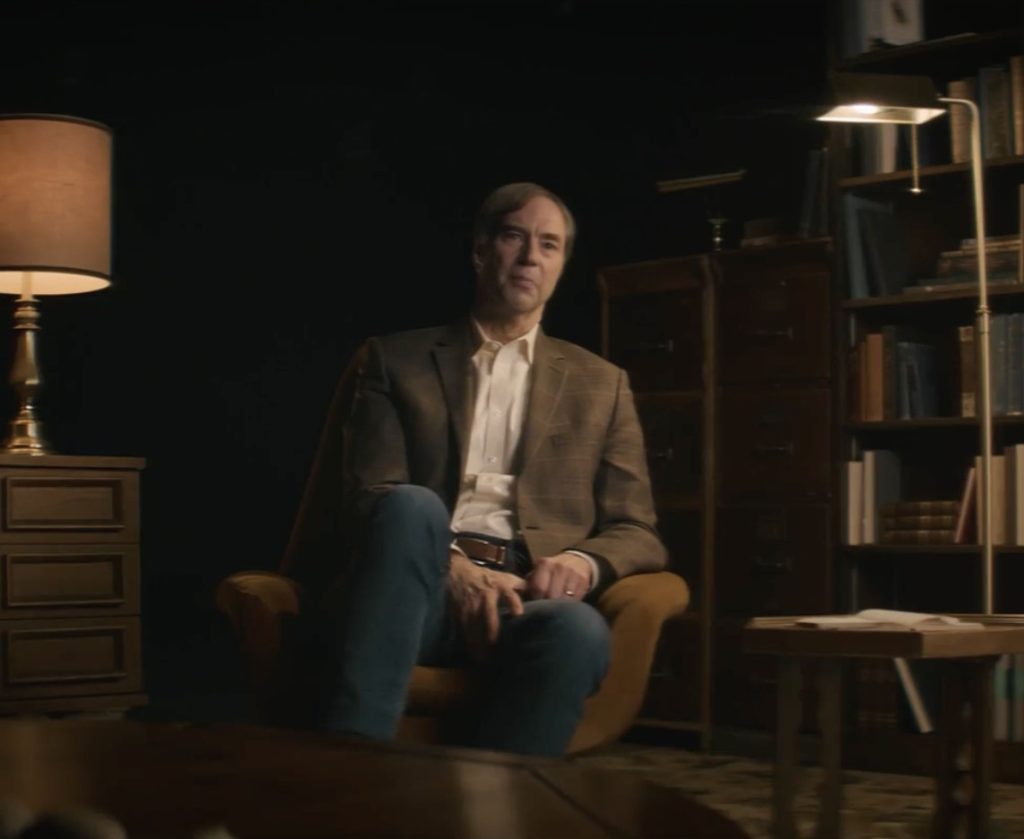
Few thinkers today challenge conventional narratives about life, science, and human existence as boldly as Stephen Meyer. Known for his rigorous approach to some of the most profound questions of our time, Meyer has long stood at the crossroads of scientific inquiry and philosophical reflection.
In this latest project, The Story of Everything, he brings those ideas to the screen, offering a visually compelling and intellectually provocative exploration of origins, meaning, and the forces that shape our universe. Set to his theaters on April 30, 2026, the film invites audiences into a deeper conversation, one that goes beyond data and theory to touch something more fundamental.
In this exclusive interview with The Eden Magazine, Meyer shares the inspiration behind the film, the message he hopes viewers will carry away, and why the search for truth remains as urgent as ever.
Your film, The Story of Everything, explores the idea that modern science points toward design rather than accident. What are the most compelling scientific discoveries that led you to this conclusion?
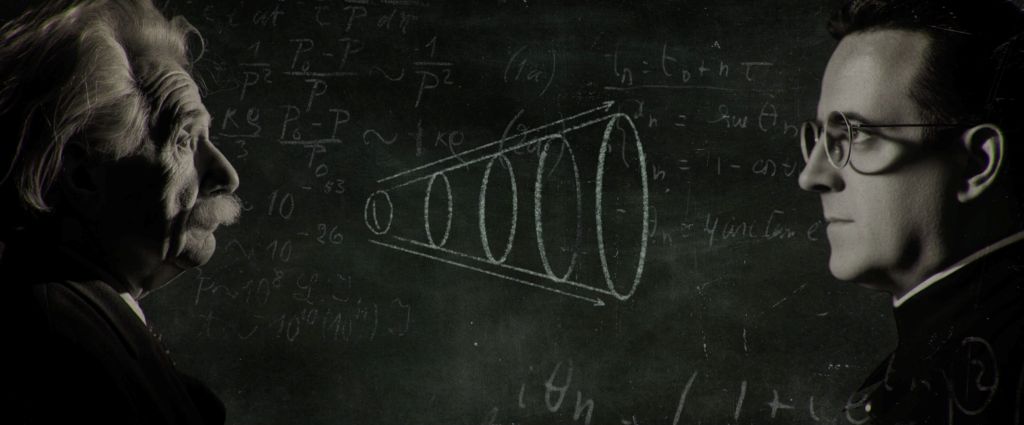
First, scientists have discovered that the physical universe had a beginning. This finding, supported by observational astronomy and theoretical physics, contradicts the expectations of scientific atheists, who long had portrayed the universe as eternal and self-existent—and, thus, not in need of an external creator. Evidence supporting the Big Bang instead confirmed traditional theists’ expectations. Nobel laureate Arno Penzias, who helped make a key discovery supporting the Big Bang, noted the obvious connection between a cosmic beginning and the concept of divine creation. “The best data we have are exactly what I would have predicted, had I nothing to go on but the five books of Moses…and the Bible as a whole,” he wrote.
Second is the finding that the physical laws and the initial configuration of matter and energy—what physicists call the “brute facts” of the universe—were finely tuned to support life. The probability that each of these factors would land, by chance, on values that support life is infinitesimally small. More on that in question 3!
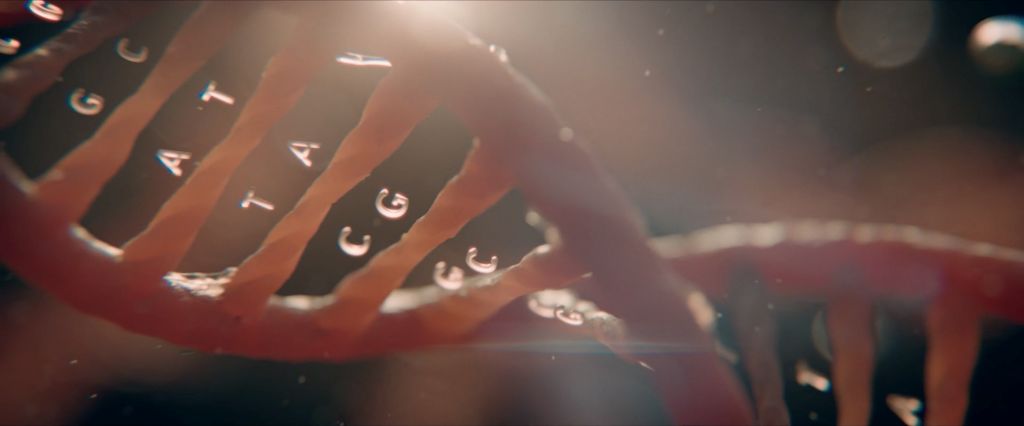
The third discovery is that DNA, the molecule at the very foundation of life, looks and functions like an information-rich language, or like digital code written by an expert programmer. DNA is made up of precisely sequenced chemicals called nucleotide bases (the A, T, C, and G we learn about in high school biology) that store and transmit information in the form of assembly instructions for building the proteins and nanomachines that cells are made from and rely on for all the processes of life. Our uniform and repeated experience as humans, which makes scientific reasoning possible, demonstrates that functional or digital information, like the information in DNA, always and only comes from minds, and not from matter alone.
Many scientists argue that the universe can be explained solely by natural processes. How does your perspective challenge or expand upon that mainstream view?
In addition to the evidence for the beginning of the universe, the existence of a life-friendly universe requires such precision in the initial configuration and the behavior of matter and energy that the probability of the physical laws and parameters just happening to fall within the very narrow necessary ranges is infinitesimally small without the foresight of a designer who had life in mind. Indeed, there is no underlying natural law or process that explains the precise values of the constants of physics or the initial configuration of matter and energy at the beginning of the universe—two of the most important types of fine-tuning in the universe.
Developments in biology also point to the activity of a designing mind. After James Watson and Francis Crick elucidated the structure of the DNA molecule in 1953, Crick developed his famed “sequence hypothesis.” In it, he proposed that the chemical constituents in DNA function like letters in a written language or digital symbols in a computer code. As Microsoft founder Bill Gates explains, “DNA is like a computer program, but far, far more advanced than any software we’ve ever created.” Even Dawkins has acknowledged, “the machine code of the genes is uncannily computer-like.” The presence of digital information in DNA thus points to the activity of a master programmer in the origin of life.
The scientific evidence shows that we live in a mind-over-matter universe!
The concept of a “fine-tuned universe” plays a central role in your work. Could you explain what fine-tuning means in simple terms, and why it is so significant?
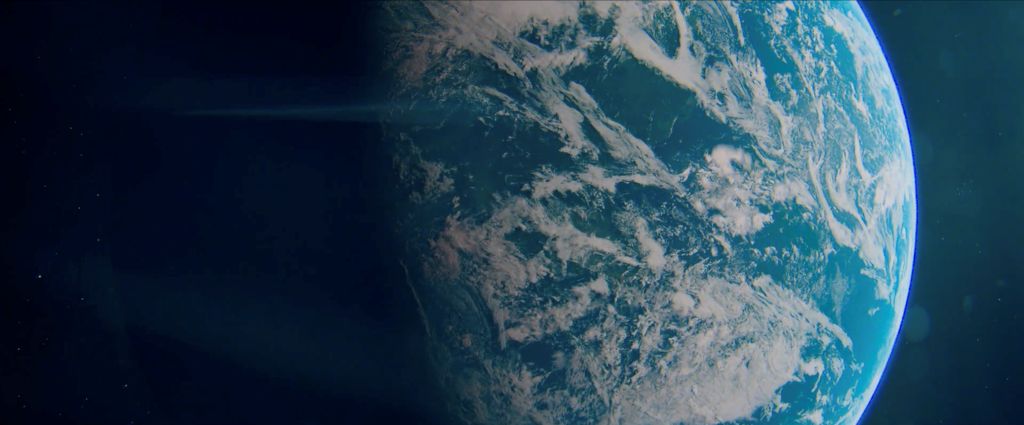
Since the 1960s, physicists have discovered that we live in a “Goldilocks universe” in which the fundamental physical laws and parameters have been finely tuned to the precise values that make it capable of supporting life. Just as Goldilocks needed her porridge, her chair, and her bed to be “just right,” the conditions of the universe must be just right in order for life to exist. For many independent factors — such as the strengths of gravity and electromagnetic attraction, the masses of elementary particles and their ratios to each other, and the initial configuration of matter at the moment of the Big Bang — slightly different values would have rendered life, basic chemistry, or even the formation of stars, galaxies, and planets, impossible. For example, if the strength of gravity were increased by just 1 part in 1034, (1034 is a 1 followed by 34 zeroes) there would be no life-sustaining planets. The former Cambridge University astrophysicist Fred Hoyle, who’d been a staunch atheist, argued that “A common sense interpretation of the facts suggests that a super-intellect has monkeyed with physics.”
For more details, see https://intelligentdesign.org/articles/list-of-fine-tuning-parameters/. This article is by Jay Richards, who is also featured in the film.
As both a physicist and a philosopher, how do you balance scientific evidence with deeper existential or metaphysical questions in your film?
In the film, we show that the evidence for design, which points to a creative intelligence, re-establishes a necessary condition of the search for personal meaning. The film addresses whether the evidence from the natural world better supports the idea that we are the accidental products of undirected processes or the belief that we are the intentional creations of a personal being. But it also addresses the implications of the answer to that question for personal meaning. Nothing can mean anything to a rock or a planet or a star—things are only meaningful to persons. So, for there to be ultimate meaning in life, there must be a person to whom we are meaningful, and who is meaningful to us. If the scientific evidence points to such a personal Creator, the existential question of our own ultimate meaning is back on the table.
Critics of intelligent design often raise concerns about its place in scientific discourse. How do you respond to skepticism from the scientific community?
We show that intelligent design theory has a strong empirical basis and that the attempt to exclude design from scientific consideration is typically predicated upon an exclusionary methodological principle called “methodological naturalism”, which stipulates that scientists must rely entirely on naturalistic explanations for everything. We challenge the definition of science as something that excludes references to creative intelligence. Instead, scientists should be open to whatever explanation best explains the phenomenon under investigation, including intelligent causes.
Intelligent design uses a standard method of scientific reasoning used in all historical sciences that involves inferring causes from their effects and comparing competing hypotheses on the basis of their explanatory power—i.e., their ability to account for what we observe in nature.
Given our ability to reach the Moon, why haven’t we pursued placing a Hubble-class telescope on its surface?
With the film being released in theaters on April 30, what conversations do you hope it will spark in both scientific circles and the broader public?
We hope that scientists and the general public will discuss the question of which story of reality best matches the evidence we have about biological and cosmological origins—the materialistic story, or the theistic story about personal purpose and meaning in relation to the Creator that we think is revealed by the natural world!