
To promote positive change, stating that climate change is your top priority is akin to saying attending church is the most essential activity of the week. Both involve acting on your personal beliefs without sharing much about the reasoning behind them. Without the clarifying details that make the existential crisis more personal and relatable for others, people may stereotype you as ‘other,’ from a different tribe. And you may ask yourself, “Why is no one listening to me? Why am I so alone?”
Today, we accept as fact the findings of learned, peer-reviewed scientific and government publications, much like the words of ancient oracles and biblical scholars.
The gospel of the climate change carbon-narrative would please Augustine in its persuasive telling. Let’s unpack it, starting with the warming effect of carbon dioxide on Earth’s climate. It is true that increasing greenhouse gases has a warming effect on the Earth’s climate. However, carbon is hardly a champion in this arena, weighing in at 11% of greenhouse gases. That would be water vapor, accounting for approximately 80% of greenhouse gases. As for the importance to the climate of the 1% increase in planetary heat energy retained by greenhouse gases, it pales compared to the thermal mass of the ocean. Spoiler alert: There is another climate change heavyweight that we’ll meet later on.
The gospel continues: soil carbon builds up very slowly as animals and plants die, and rocks break down. When detritus decays, most of the carbon goes back into the air. Springtails and worms would beg to differ with this. They actively cut and grind tough plant fibers to prepare the soil for a chemical change into rich, black soil called humus, which can hold carbon for thousands of years. Hooved grazers walk on their toenails to speed up the fiber breakdown and return nutrients to plant roots. Stimulating a plant by chomping or crushing it causes it to increase photosynthesis and repair itself. Only plants left to lie fallow on the ground rot and release carbon into the atmosphere. Not mowing a lawn raises its carbon footprint, while cutting the grass encourages plants to grow, absorb more carbon, and send more carbohydrates from their roots into the soil.
According to the gospel, climate change started about 150 years ago when the carbon cycle became unbalanced with the beginning of the Industrial Revolution, which involved burning fossil fuels and darkening our skies. Today, we are releasing dioxide 100 times faster and suffer twice the carbon dioxide burden at 420 parts per million.
Almost everybody knows that climate change is as old as the Fertile Crescent, located in the valley of the Tigris and Euphrates Rivers, where it was altered by plows opening the land, releasing carbon dioxide and water, drying out the soil, and burdening the atmosphere with more greenhouse gases. We turned the cradle of agriculture into a desert. Thirty-one-year-old whaling captain William Scoresby knew in 1820, when he published, “changes of climate to a certain extent, have occurred, within the limits of historical record; these changes have been… considered as the effects of human industry, in draining marshes and lakes, felling woods, and cultivating the earth.”
The government claims that rising sea levels are mainly caused by ice melt and heat-driven expansion of ocean water on a global scale, and regionally by gravity, land motion, and rainfall. Captain Scoresby knew better, having spent the winters of 1810 and 1811 frozen in the Greenland Sea. For two Aprils, as the ice around his ship melted into blue water, he lowered a ten-gallon wooden cask with valves at both ends to collect seawater at great depths and measure water temperature. When he found water six to seven degrees warmer than the surface, he was surprised to discover the Gulf Stream 100 to 200 fathoms below, flowing toward the Arctic Ocean. In 2007, the Gulf Stream surfaced in Svalbard, and today glaciers on land are melting due to increased stormwater runoff warmed by our heat islands and hardscapes.
Greenlanders dismissed tales of major sea level rise caused by ice melt, reporting that there has been no significant increase in water runoff into the ocean due to the melting of the Greenland ice sheet, except in 2012. Most of the ice melt pools on the surface and refreezes in the fall. Warmer summer weather ushers in more plant photosynthesis and evapotranspiration.
As for the energy retention of greenhouse gases, followed by atmospheric heat-driven expansion of ocean water, elementary school science students would readily demonstrate that one cannot warm water with a hair dryer. Instead, it must be placed on a hotplate.
The truth is that climate change is real. Air temperatures are rising, and there is more heat and energy holding moisture in the atmosphere. Moist air picked up from the ocean expands when passing over our heat islands and paved surfaces. Hotter air, thirsty for more moisture, dries out the land. This increases the risk of forest fires. With more moisture, more heat energy is retained in the atmosphere, causing storms to become fiercer and dump more water in a short period.
A healthy lawn, without watering or quick-release fertilizer that kills soil microbes, develops deeper roots and richer soil. Because plants produce sticky carbohydrates in the soil, mineral particles are kept far apart, allowing four inches of soil to absorb seven inches of rain. If the land doesn’t absorb the rainfall, stormwater runoff can damage properties, harm residents in low-lying areas, and cost municipalities a lot of money.
Stormwaters are rising despite little increase in annual rainfall. We have replaced the ground’s natural carbon sponges with hardscapes that warm the landscape. Stormwater flows over heat islands, transferring heat energy to the Atlantic and strengthening the Gulf Stream, which has an enormous thermal mass that melts sea ice, opens the Arctic Ocean, and alters the Arctic climate.
Every story adds value to the global conversation, from ancient shifts in the Fertile Crescent to modern opportunities to green our cities. Let’s turn skepticism into a connection with the land and inspire real change.
To paraphrase the Talking Heads, where is the water flowing underground, under the rocks and stones, and into the blue again? Once in a lifetime, opportunities arise to restore vegetation and soil, turning hardscapes and heat islands into green landscapes—even if it’s just with potted plants on cement stoops.
With the right stories and understandings of how we’re all connected, one planet, we can rehydrate the earth and cool the climate. Then, as the Velvet Underground once sang, you know it’ll be alright.
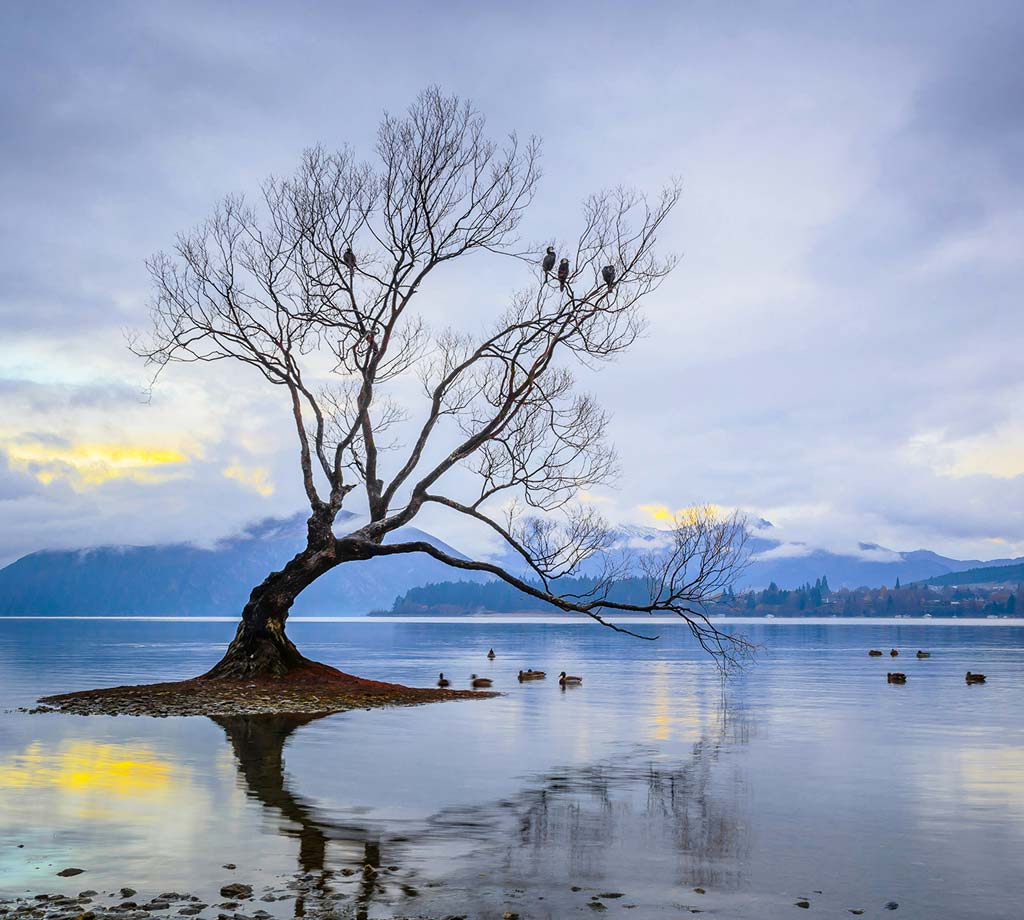
Photo by Oliver Wales
By Dr. Rob Moir