Celebrating 14 Years of the Season of the Award-Winning TV Series, Animal Zone
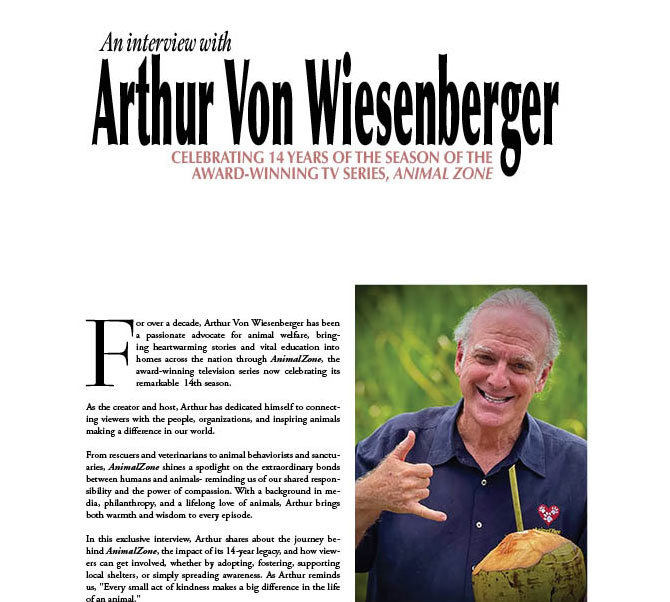
For over a decade, Arthur Von Wiesenberger has been a passionate advocate for animal welfare, bringing heartwarming stories and vital education into homes across the nation through AnimalZone, the award-winning television series now celebrating its remarkable 14th season.
As the creator and host, Arthur has dedicated himself to connecting viewers with the people, organizations, and inspiring animals making a difference in our world.
From rescuers and veterinarians to animal behaviorists and sanctuaries, AnimalZone shines a spotlight on the extraordinary bonds between humans and animals- reminding us of our shared responsibility and the power of compassion. With a background in media, philanthropy, and a lifelong love of animals, Arthur brings both warmth and wisdom to every episode.
In this exclusive interview, Arthur shares about the journey behind AnimalZone, the impact of its 14-year legacy, and how viewers can get involved, whether by adopting, fostering, supporting
local shelters, or simply spreading awareness. As Arthur reminds us, “Every small act of kindness makes a big difference in the life of an animal.”
What inspired you to create AnimalZone, and how has your mission evolved since the show’s launch?
AnimalZone was born out of a reaction—quite literally. I saw that iconic PSA with Sarah McLachlan and those heart-wrenching images of distressed dogs, and I had to ask: *Is this really helping?* When I asked a friend running our local shelter, she said, *Not really.* The ad made shelters look like places of sorrow, and the donations didn’t even reach local organizations. So, I thought—why not flip the narrative? Why not spotlight the heroes in our communities who are saving lives, offering love, and creating joy for animals and people alike? AnimalZone began as a local show in California’s tri-counties and grew like a happy rescue pup—bounding across states, then onto Cox TV’s National Network, and eventually leaping into the digital wilds of Tubi, Plex, Pluto, Roku, and beyond. What started as a celebration of cats, dogs, and the occasional rabbit has blossomed into a globe-trotting journey featuring barnyard buddies (think donkeys, goats, pigs) and even wild souls like sea turtles, owls, and Hawaiian honey bees. Yes—we just filmed our first insect-focused episode! Turns out, the buzz is real.
With the upcoming season airing in August 2025, what new themes, animals, or stories can viewers expect to see?
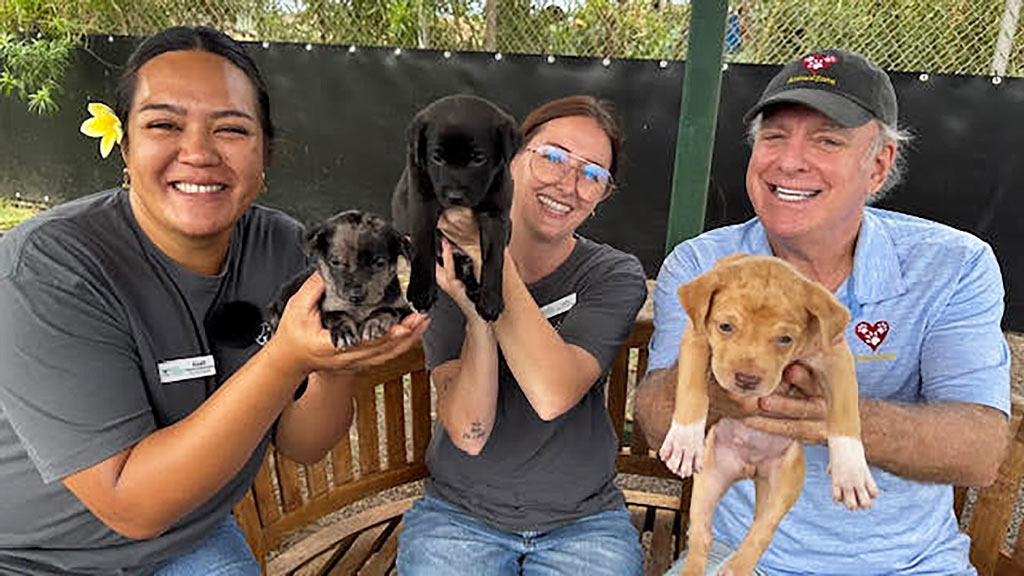
Hawai’i gave us more than stunning scenery—it gave us wisdom. In this new season, we dive into how shelters are not just housing animals—they’re healing them. At Maui Humane, we discovered the “Beach Buddies” program, where visitors can take shelter dogs out for the day—to the beach, on a hike, or even to brunch! The result? Sun-soaked smiles, wagging tails, and sometimes, forever homes. It’s enrichment for both ends of the leash.
Can you share a particularly touching or memorable moment from filming this new season?
At Rainbow Friends on the Big Island, I met Mary Rose, a woman who radiates aloha. Her sanctuary isn’t just a place—it’s a vibration. At one point during filming, she opened the gates and a joyful parade of animals—tails wagging, hooves prancing—ran to a nearby pond and dove in with abandon. It wasn’t just cute—it was a revelation. In that moment, I saw what freedom, healing, and connection look like when given the space to thrive.
AnimalZone has a strong focus on education and compassion for animals—how do you balance entertainment with advocacy in your episodes?
Education sneaks in quietly when you’re having fun. We don’t lecture—we listen. Our guests are passionate animal lovers, caregivers, scientists, and behaviorists who share not only what they know, but how they *feel*. And when you watch an animal trust a human, or a wild bird fly again, you *learn* what compassion really looks like. Animals are our co-stars—and our co-teachers.
This season, are there any new partnerships with sanctuaries, shelters, or conservation groups that you’re especially excited about?
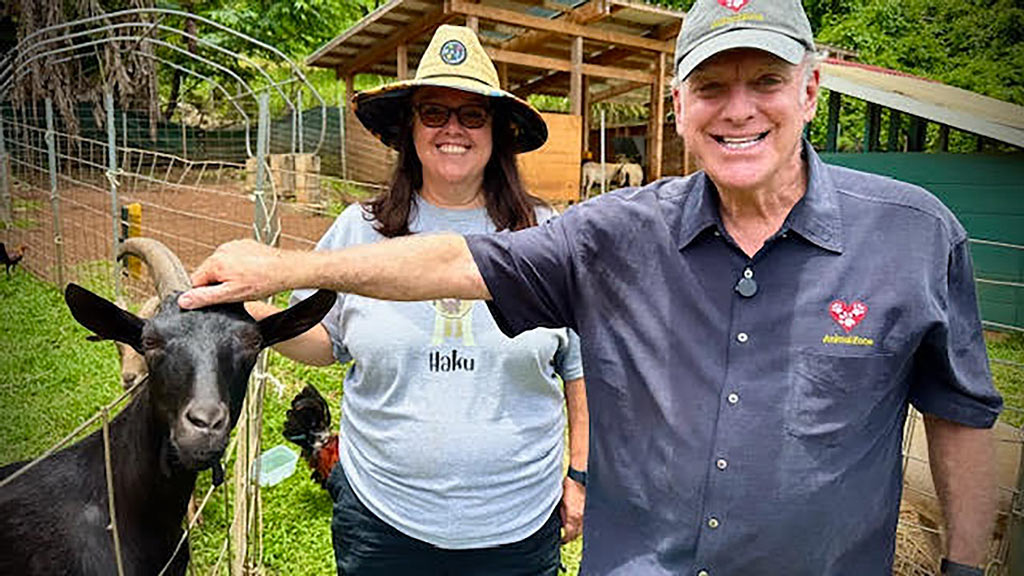
Absolutely! From cuddling cows at the Krishna Cow Sanctuary near Hilo, to learning about endangered sea turtles with Hawai’i Marine Animal Response (HMAR), to admiring the majestic nēnē goose at the Hawai’i Wildlife Center—this season is bursting with heart and hope. I was especially enchanted by the Hawaiian honey bees at Bird & Bee Hawai’i. Who knew that pollinators could be such poetic protagonists?
How do you select the animals or topics featured in each episode, and what criteria are most important to you and your team?
We start with the animals. Are they loved? Are they safe? Are they treated with dignity? Then we look at the people—are they doing the work for the right reasons, with knowledge and integrity? And finally, we listen to the story. If it stirs something in us, chances are it will stir something in our viewers.
How has audience feedback influenced the direction of AnimalZone over the years? Have any fan stories stood out to you?
AnimalZone fans are a tribe of kindred spirits. Their feedback is often emotional—thank-you notes, stories of adoptions, even videos of kids watching with their pets. One viewer told us the show helped her elderly mother rediscover joy after losing her dog. That’s when I realized: we’re not just telling stories—we’re nurturing hearts. It’s like rediscovering that childlike awe of nature, where every wag, purr, and flutter is a tiny miracle.
What challenges do you face while filming with animals, and how do you ensure their well-being and comfort on set?
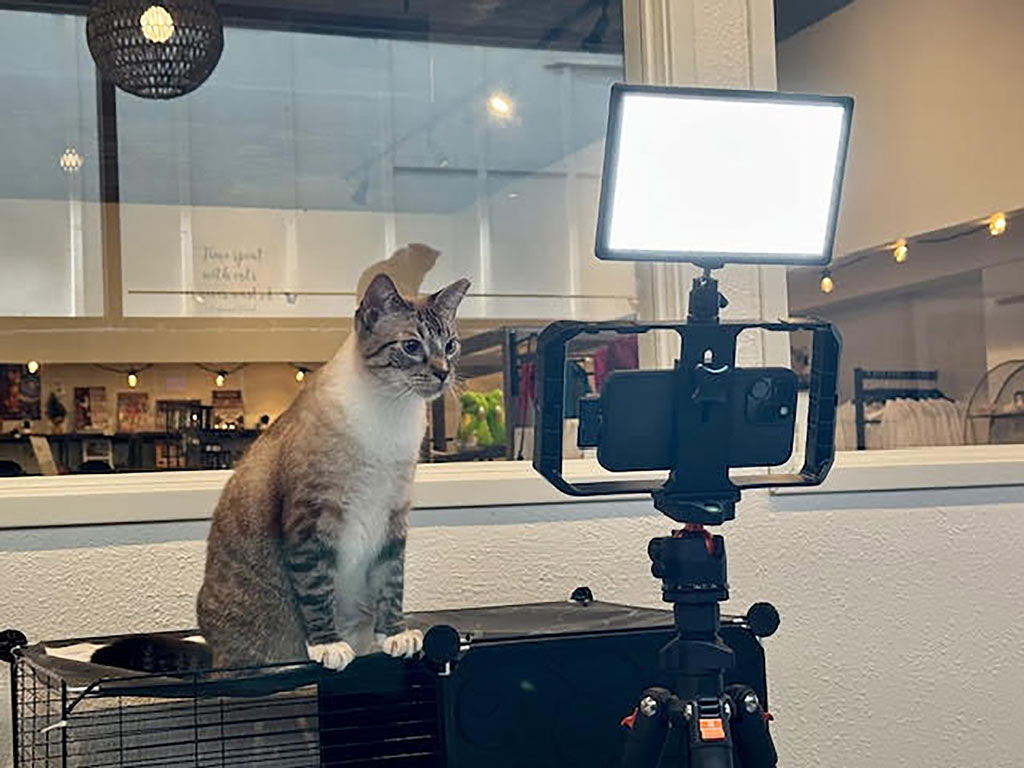
Animals are honest—if they’re uncomfortable, they’ll let you know. So we’ve learned to tread lightly, both literally and figuratively. We speak in soft tones, avoid sudden movements, and even our clapperboard barely whispers. We’ve discovered that hats can freak out certain animals, and that cameras with big lenses look like monster eyes to cats. Solution? iPhone 15s. Sometimes low-tech equals low-stress.
As animal welfare continues to gain momentum globally, how do you see AnimalZone contributing to the broader movement for change?
We’re storytellers with a purpose. By showing how animals are treated around the world—from GPS-tagged cows in Switzerland (yes, cowbells are being phased out to reduce stress!) to free-roaming dogs who are finally getting a couch to nap on—we’re helping shift culture. Compassion is contagious. And the younger generation is picking up the torch. If we can move even one viewer to adopt, to donate, or just to *care*, we’re doing our job.
Looking beyond this season, what are your hopes for the future of AnimalZone? Do you have any dreams of expanding to new countries or digital platforms?
Absolutely. I want to keep journeying—geographically and emotionally. Every country, every culture, has something to teach us about how we live with animals. And I hope to keep exploring that ever-expanding bond, one hoofprint, pawprint, or feather at a time. As long as there are stories to tell and hearts to open, AnimalZone has a place in this world.
What personal experiences or animals in your own life have had the most profound impact on you and your passion for animal advocacy?
Mikey. He was a rescued pit bull, barely 8 months old, and had already seen more hardship than most. Abused, hit by a car, barely held together. But he still wagged his tail. With surgeries, water therapy, and an ocean of love, he became the most tender, goofy, and loving companion. When he passed, the grief was overwhelming—and sacred. We’ve also rescued donkeys, cats, and even a hinny named Jenny. They are not just pets—they’re family, and teachers of joy.
Outside of AnimalZone, how do you stay grounded and inspired? Are there daily practices or values that guide your creative and personal journey?
I was shaped by a Quaker School in New York and later by the quiet reverence of an Episcopal School in Switzerland. Over the years, I’ve found my own spiritual current—one that flows quietly beneath everything I do. Animals are a part of that light. Their presence, their resilience, their ability to forgive and to love without agenda—they remind me to listen more, judge less, and walk gently. Helping them helps me.