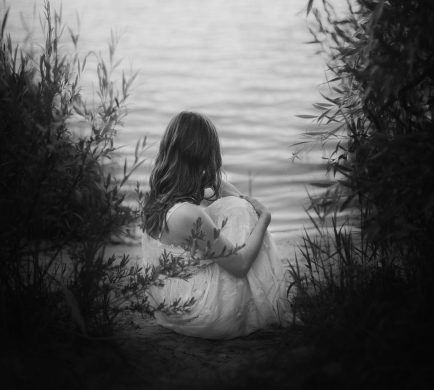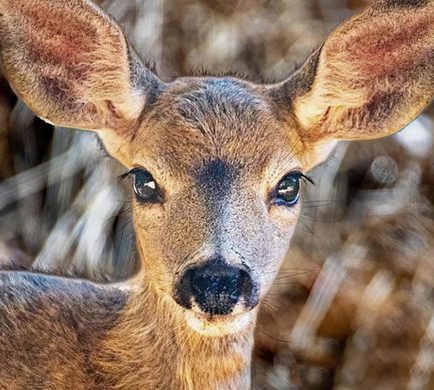
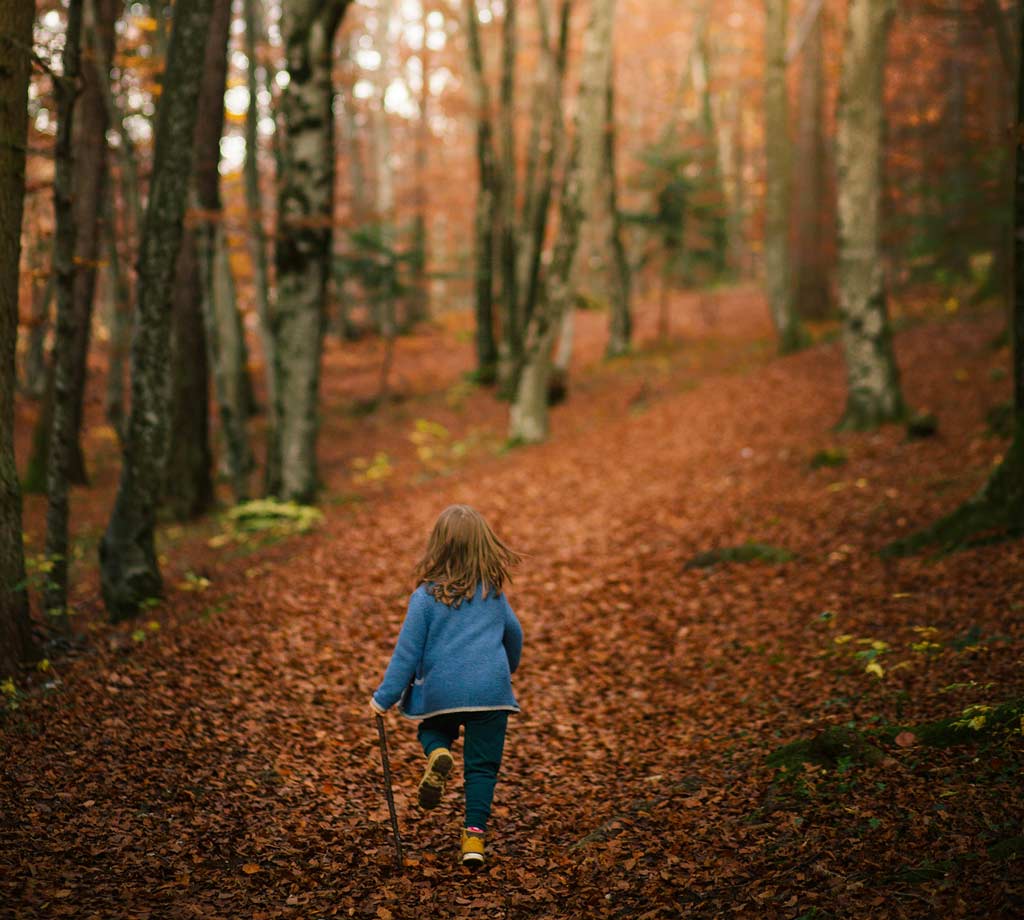
Henry David Thoreau walked the shore of Walden Pond, into the woods, and journeyed beyond. He withdrew not from the world but from its assumptions during a time when people believed the authority of the state was a kind of moral force. Laws obeyed as though obedience itself were a virtue.
Thoreau listened to the wind in the pines, to the thawing of the pond, to the quiet insistence of what is. And he saw otherwise. “It is not desirable to cultivate a respect for the law, so as for the right.”
We imagine we learned this lesson, and pride ourselves on independence, skepticism, and the freedom to think. Yet the habit of deference is not so easily abandoned. It changes its clothing and returns.
Once it was said, “the law commands.” Now, they say, “the science has spoken.”
And so, we defer again.
Science is not a grand monument to our intelligence. Like Walden Pond on a misty morning, science is a surface, clear in one light, opaque in another. Only what we are patient enough to observe is uncovered. It is a way of seeing that calls for full attention, not submission. Science is not the ultimate authority.
Charles Darwin looked closely. Patiently, over decades, he traced the slow shaping of life, the quiet sorting of form and function across time. Darwin did not speak in certainties, more often in wonderment. Darwin did not say that struggle alone governed the world. He noticed, too, that “those communities which included the greatest number of the most sympathetic members would flourish.” More than competition, there was relating, coming together into a community.
But others favored a simpler law. Herbert Spencer coined the phrase “survival of the fittest.” This phrase carried the weight of inevitability. Life shifted into a competition. Success became a verdict. Along with it, a subtle permission darkened—those who have, deserve; and those who prevail, are meant to prevail.
The woods beyond Concord do not speak so plainly. They dwell beneath the vaulted canopy of trees, breathe in the forest’s perfume, and listen. The language of winners and losers fades away. The fallen log feeds the soil, and the shaded sapling waits. The beech tree holds its leaves longer, littering the ground in the spring. Beneath leaf litter, unseen, roots and fungi weave a living fabric that swaddles the community. Water lingers, carbon moves, and nutrients pass. Signals travel in silence from one being to another.
Suzanne Simard has given us a glimpse of this hidden exchange, where the so-called “Mother Tree” is less a ruler than a participant. The tree does not stand alone but is held within a network, a network that both sustains and is sustained.
Too often, we forget not the fact of competition but the context in which it happens, like fish unaware of the water.
Kropotkin, observing life under harsh, crystal-blue Siberian skies, saw that survival often depended not on rivalry but on mutual aid. “Sociability,” he wrote, “is as much a law of nature as mutual struggle.” In the cold, in scarcity, it is not the solitary organism that persists, but those that find ways to endure together.
Competition and community are not opposing truths that cancel each other out. But we often choose to elevate one while neglecting the other. We speak of inheritance as if life were a parade of individuals passing on their gains. Yet, what is inherited is not just traits, but conditions—the soil, the water, the air, and the delicate web of relationships that make any life possible.
Like moths to a flame, we are drawn to mistake success for fitness, accumulation for necessity, and dominance for law. It’s so easy to believe that what has come to be must therefore be right.
But the pond reflects whatever stands before it. It does not judge. That task remains ours.
“Any man more right than his neighbors constitutes a majority of one,” Thoreau reminds us. Not because he stands apart, but because he stands attentive to what is seen, and what is overlooked.
We must not reject science, but instead engage with it more honestly. To see not only patterns we identified but also those we have overlooked. Recognize that life does not depend solely on triumph, but on balance and relationships that endure even as they evolve.
We participate in the unraveling when we continue to take from the system more than it can sustain, and justify imbalance as “natural,” and confuse dominance with fitness.
Thoreau went to the woods to live deliberately, confront the essential facts of life, and see what they require of him.
When we enter our woods, do not withdraw, but strive to see not what is convenient, not what is customary. Seek what is truth, what sustains.
The measure of understanding isn’t just what we can explain; it’s also whether we can recognize, in time, when what we call success is destroying the very conditions that make life possible.
by Dr. Rob Moir
Dr. Rob Moir is a nationally recognized and award-winning environmentalist. He is the president and executive director of the Ocean River Institute, a nonprofit based in Cambridge, MA, that provides expertise, services, resources, and information not readily available at the local level to support environmental organizations’ efforts. Please visit www.oceanriver.org for more information.