What and how we eat is intimately connected to our physical health. And we know that physical health and mental health are inseparable. Thus, what and how we eat our diet, and nutrition – are closely related to mental health (and our mental health also drives what and how we eat). These facets of life are also related to our interpersonal connections—how we interact with others. What and how we eat is also deeply connected to soil health and sustainability, as small-scale, organic farmers are well aware. And ultimately to planetary health, as so many scientists have affirmed.
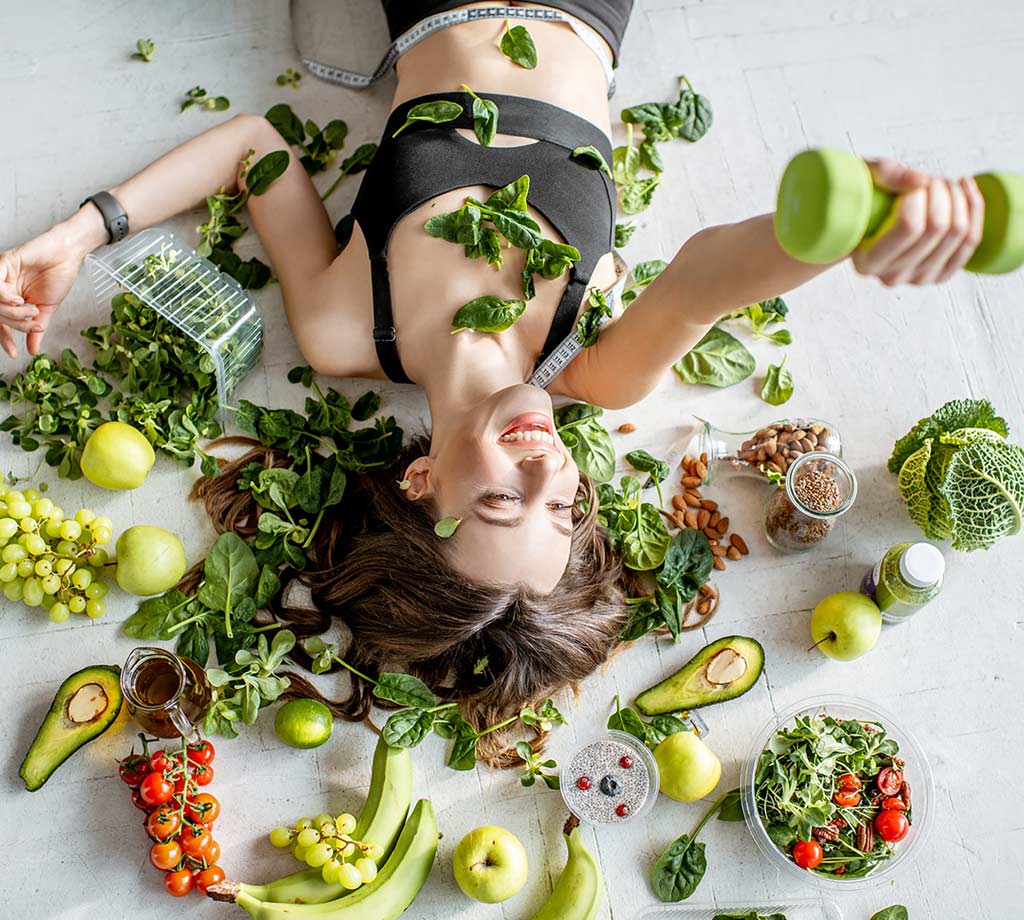
So, eating patterns, physical health, mental health, social connections, and planetary health are all intimately linked. Fortunately, the same healthy way of eating is good not just for physical health but for mental health, social connections, and our environment. Traditional diets high in local whole foods (as exemplified by the Mediterranean diet, among others) tend to be good for our health as individuals while also being good for the health of our communities and our land. What is my view of a healthy way of eating—as a mental health doctor and prevention doctor who is also a farmer? A predominantly whole-food (i.e., minimizing ultra-processed foods), mostly plant-based diet with a lot of diversity on the plate.
Just as goodness interconnects with other goodness, things that are not good for our health are also neither good for our mental health nor for our environment. Consider the interconnectedness between large-farm monocultures, genetically modified organisms (GMOs, like Roundup-ready soybeans and field corn), concentrated animal feeding operations, and ultra-processed food—the industrial food production complex. It’s not good for our physical health, our mental health, our environment, or our planet. Large-scale production of meat and other animal-based foods, for example, is one of the key drivers of climate change. I’m not a vegan or even a strict vegetarian. Yet. But I am trying my best to eat “smart.”
In my new book Veggie Smarts: A Doctor and Farmer Grows and Savors Eight Families of Vegetables, I write about a doctor who got smart about vegetables by becoming a farmer.
It’s about my journey leaving behind the big apple for an old stone house and a fertile field, building a thriving organic vegetable, fruit, and flower farm in the Hudson Valley of New York. I explain how nearly all of our veggies, as it turns out, come from just eight plant families from among more than 400 families of flowering plants. Learn about the Brassicas, the Alliums, the Legumes, the Chenopods, the Aster Greens, the Umbellifers, the Cucurbits, and the Nightshades. I share lighthearted scientific facts, like why onions make us cry, beans make us fart, and beets can make our pee pink while giving nutritional information about dozens of vegetables situated within these eight families. I give 16 of my simple farm-to-kitchen recipes, share my joys in growing a bounty of clean, delicious, and nutritious food for CSA (community-supported agriculture) members and farmers market customers, and convey what I learned about the Delamater family who farmed this same land
some 200 years before me (and what and how they ate). I explain GMOs, ultra-processed food, and why eating local is so important while providing 30 types of “free health advice” to improve your health—like growing some of your own food as a way to connect to nature, nurturing your body and mind.
I got smart about vegetables by growing them. As a farmer, I needed to understand their seeds, their seedlings, how they grow, their biggest challenges across the eight families, their flowers, and exactly when and how to harvest them so that I could best serve my farm customers. And with so much produce around—bushel-baskets full, then wheelbarrows full, then a farmers market delivery van full, and all the while a kitchen full—I needed to get smart about how to eat veggies. This was at the same time when I was learning more about nutrition and lifestyle medicine while also setting personal goals around mindful living and reducing the impact of external pressures on my food and on my life. So, I got veggie smarts, and I hope to make you a Veggie Nerd, too.
What does veggie smarts really mean? Here’s my definition, though it doesn’t appear in the Oxford English Dictionary or Webster’s. Yet. As noted, a key aspect of healthy eating is diversity. Diversity on small farms and diversity on our plates. One way of increasing diversity on our plates is by getting to know our vegetables better. My concept of “veggie smarts” means having a thorough understanding of vegetables so that meals will be more delicious and health will be optimized. It means knowing how the different vegetables are and are not related to one another (in those eight families like, yes, the Chenopods and the Aster Greens), thereby enhancing selections for a highly diversified way of eating that promotes physical and mental health and prevents or reverses poor health and disease. And veggie smarts is the ability to confidently find, understand, and eat vegetables smartly (like my “eight on my plate” idea), all the while cultivating curiosity about how vegetables are grown on farms and can be grown at home. A botanical understanding of these eight families brings about a culinary understanding of them, which benefits one’s food choices and, thus, one’s health. Having veggie smarts informs decisions in grocery stores, restaurants, the home garden, the kitchen, and around the table. Having veggie smarts is about vegetable knowledge, yes, but it’s also a mindset and a commitment to oneself. My hypothesis, admittedly entirely untested, is that understanding our veggies better is conducive to eating more of them. It sure worked for me.
Now, shedding my overalls and donning my white coat once again. Eating well is about feeling well, preventing disease, and living long. I encourage personal goals—your own goals—around eating well, physical activity and exercise, and the other pillars of lifestyle medicine. Grow some food. Fortify your brain and all of the rest of your body. Cherish and strengthen your relationships—in the garden, in the kitchen, around the table, on nature trails, and elsewhere. Care for our soil, our water, and our air.
Join me in embracing and honoring the deep connections between what and how we eat, our physical health, our emotional and psychological well-being, our connections to one another, and our environment and the planet’s sustainability. Let’s eat well in order to live well.
Vegetable Nerds, Unite!