
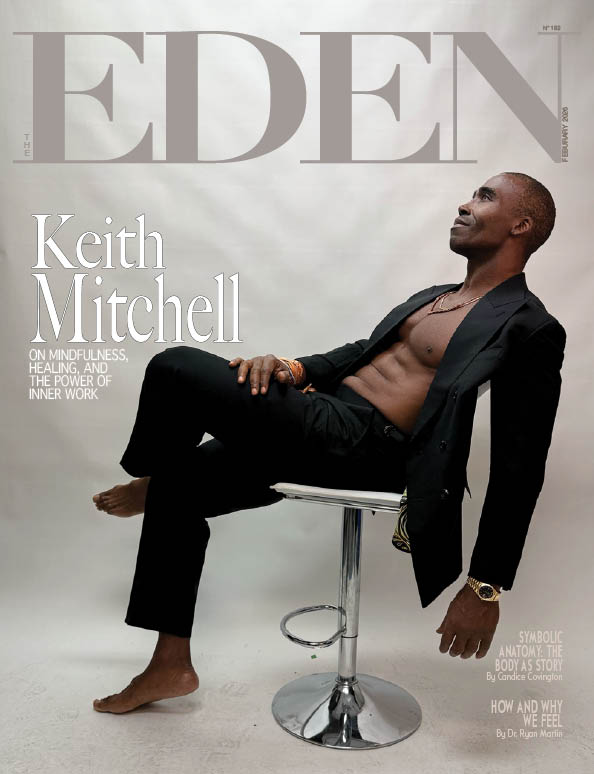
A Conversation with Keith Mitchell
Former All-Pro NFL linebacker for the New Orleans Saints, Houston Texans, and Jacksonville Jaguars. Today, a renowned mindfulness teacher, wellness coach, motivational speaker, and humanitarian.
For some, the journey to awakening begins with a gentle shift and an unexpected bend in the road that quietly redirects the soul. For others, it arrives as a sudden dead end, demanding the courage to forge an entirely new path where none existed before.
For Keith Michell, it was the latter.
Read Our Magazine…
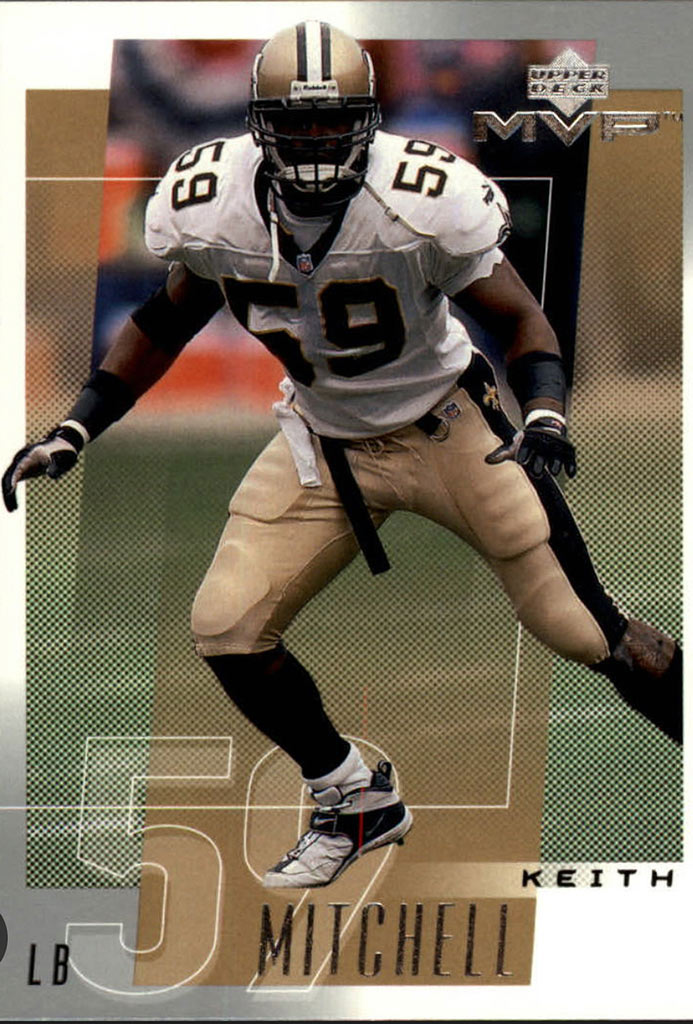
At the height of his NFL (National Football League) career, Keith Mitchell was living the American dream. An elite linebacker for the New Orleans Saints, Houston Texans, and Jacksonville Jaguars, he played before more than 80,000 roaring fans, embodying strength, discipline, and triumph at the highest level of professional football. Fame, success, and legacy were well within his grasp until one play changed everything.
A devastating spinal injury on the field brought his career to an abrupt halt. In an instant, Keith found himself flat on his back, staring into the blinding stadium lights, unable to move. The roar of the crowd faded, replaced by silence, and a profound reckoning.
What followed was not an ending but a rebirth for Keith.
Through adversity, stillness, and deep inner inquiry, Keith Mitchell transformed pain into purpose. Today, he is a powerful voice in mindfulness, healing, and conscious living. His journey beyond the helmet and into the heart is beautifully captured in his new coffee table book, The Mindfulness Mission, a visual and spiritual invitation to reconnect with presence, purpose, and inner strength.
In this intimate and inspiring conversation, Keith shares how a life-altering moment became the gateway to awakening, and how true power is not found in force, but in awareness, compassion, and the courage to begin again.
Your new coffee table book, The Mindfulness Mission, is visually stunning. What inspired you to create it, and what message do you hope readers take away from it?
So much is telling us, from an esoteric perspective, what to do, but not from the current state. Meaning it’s 2026, and I feel we need to consider an evolution in our thoughts and thinking. By doing so, we question whether we are holding beliefs for tradition’s sake or because they work for us. Meaning we are seeing progress, whether it is being kind, forgiving, or showing up with confidence to execute our talents. I don’t usually see this from believers. I see fear, insecurities, dysfunction, and unhealthy individuals who are obsessed with the belief but missing the upgraded potential for living.
After a career-ending injury in the NFL, your journey into mindfulness and yoga began. How did that transition shape who you are today?
It sparked my curiosity about living and about how I need to care for myself. The first place it started was with nutrition. I want you to follow this idea with me. If you can see the scarring on your leg from when you were 10 years old, imagine what the impact of the harm we have done to ourselves on the inside. Kind of scary, right? Well, because I found this out around the time of my injury, I prioritized the healing internally. The misconception that the detox is physical is a huge myth that is inaccurate. We are giving an identity to what we call Bad Bacteria. Meaning these attitudes and emotions live inside us, and we feed them what they need to exist. The anger and rage at this state of our lives we are harvesting are disrupting our ability to maintain a harmonious state in our bodies and in our endeavors.
Many athletes struggle to find a sense of purpose after retirement. What advice would you give to others going through that same identity shift?
Sports are not a purpose; you must find one. This can be missing from a sports career, from academia, and from any other career, so this isn’t necessarily just about sports. Buddha asked what the meaning of life was, then concluded that life has no meaning. I agree with that. Life has no purpose. We give meaning to life. People get sick, people die, we have trauma, we have problems. We are not here just to make money, accumulate things, or outdo one another. We are here to manifest loving situations, co-create with the planet, and solve the problems, traumas, and difficulties that inevitably arise. And we get distracted from that, because the pressure is to be a character, to be a consumer. So, when we think about purpose and how it fits into the course of one’s life, the only purpose is found in servitude, helping humanity, and solving problems. We connect to purpose by realizing our experience and overcoming what has happened to us. Because someone else will come after me and experience a similar situation, and I will then have the opportunity to use my knowledge and experience to help them. At the same time, by doing this, I help myself. And this gives me purpose.
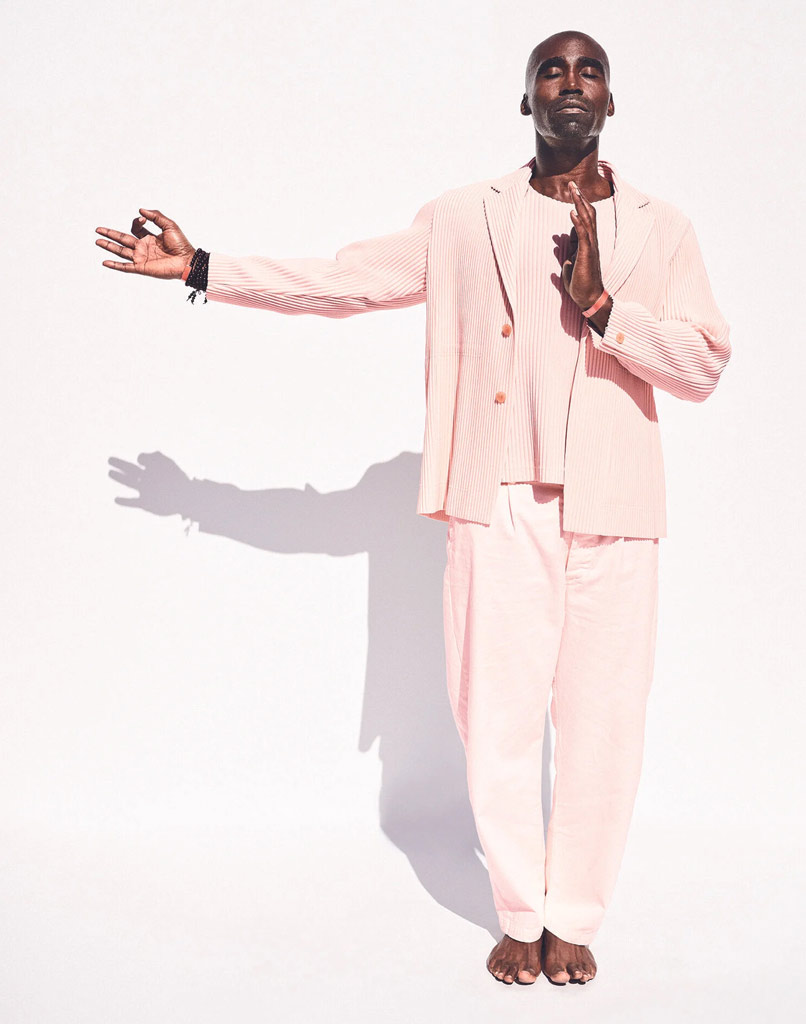
Well, naturally, the human in an unnatural environment will adapt and create another, even if it’s dysfunctional; the human has a renowned ability to do so. However, the ability to remember what is and the meaning of existence is where the core principles of what I feel religion, or what I think religion was meant to be. The reason why I say this is that when I found my practice, I realized that service to humanity is all that makes sense.
I had to break my life down to its most
Unapologetic perspective, and be willing
to share both my highs and my lows to find my truth.
And it starts with our words.
I suggest you make them a tool,
Not a liability.
The wear and tear, physically, mentally, and emotionally, on professional athletes is being overlooked in today’s fast-paced, big-dollar sports business. How do you envision mindfulness becoming a more integrated part of professional sports and youth athletics in the next decade?
I don’t think players realize how much vitality is lost while playing. Maybe it’s changed a bit, but many guys aren’t really taking care of themselves before or after the intense competition and depletion. I used to spend around $300,000.00 dollars on trainers, suppliers, nutrition, and therapists to heal my body in the offseason. I had someone literally stretch me for 90 minutes per day. On top of that, the lifestyle you lead is unreal, and I’m not sure how you could possibly prepare for it.
I believe the new athlete comes with a mindfulness coach. It will be imperative to keep your mind together. Because you grow up in an unrealistic world, to most of the population, and how do you learn to relax in it to stay the course! Women, social distractions, money, family, how can you process? Just wait, every team will have a mindfulness coach.
Your book blends art, mindfulness, and personal reflection. How did you choose the images and stories that best capture your transformation?
We’ve been given philosophy that served a purpose during that day; to some extent, it still serves. However, I’m suggesting an updated approach to know what to do. Thought, process, and action to navigate to maximize the human potential. How did I get to these images? I had to break my life down to its most unapologetic perspective, and be willing to share both my highs and my lows to find my truth. And it starts with our words. I suggest you make them a tool, not a liability. If 70 percent of our thoughts are repetitive, then let’s be mindful of the words we use with complete conviction about how we know these words. By doing so, words equate to conversation, which is also your integration. So, for example, I define the term love to understand how it truly applies to me, so when I use it or suggest an idea about it, it’s not some drawn-out, vague concept; it’s specific to what I mean. Why is this important? When I decide to share love with someone else, I don’t assume their definition is my definition. I’m clear from the standpoint of what do you mean by love?
I captured the stories that were so pivotal in my journey, whether I succeeded or failed. In those moments, what I had to do was pull myself out of the holes that I had put myself in. With an understanding that no one can help me but me. Not even the one I call God put me in those predicaments. I did, and it will be the God in me that will need to be my deliverance.
As someone who experienced both extreme physical performance and deep inner healing, how do you define “strength” today?
Strength looks good physically, I can’t lie. I love to strive to look my personal best; however, we in this human body are frail and weak in comparison. So, the strength you want to retain is inner strength. The resilience for that can’t be scaled. My formula. The mind is God, for what you believe will be your truth; the body is the son of God, and the heart is the Holy Spirit, for it is the will that cannot be measured. The inner strength is how we move mountains one brick at a time for a lifetime if we must. That’s where our true power lies, in our resilience.
You’ve often spoken about the importance of breath and stillness. How do those practices help you stay grounded in today’s fast-paced world?
Breath is spirituality. Breath is an orgasmic life force energy that enhances and maintains our vitality. Meditation is everything, to drop in to listen to the things that matter, to reflect to realize my strengths and my so-called weaknesses, to realize what is and determine where I want to be. Breathe is a curiosity about life, with a desire to experience it all. It’s the longing to be loved and share it. It’s my reason why. The world is moving at such a fast pace because people still think that you must do something out there to find mindfulness, the realization that everything that you want is already here!
How has yoga changed the way you relate to your body? Not as an athlete, but as a human being?
Yoga teaches you how to acknowledge what feels good. It also helps you feel comfortable being okay with feeling good. It’s a physical dialogue with you and your body. Like a formal conversation with your hips, your back, your pains, and your grief. To sit with yourself and work it out, unwind your own complexity. I didn’t realize when I first started that the relationship started with the one I had with myself. Much of my life, I thought relationships started with another person. Yoga revealed the relationship that I had with myself, which was nonexistent, with dysfunctional patterns that insinuated that I didn’t even care about myself. How do I know this? I didn’t get the sleep I needed. I didn’t nurture myself properly; I let people into my space who didn’t deserve my time. I constantly put myself last. And my body resented me for doing so, and it checked out!
Your message bridges wellness, spirituality, and social awareness. How do you see yoga and mindfulness influencing collective healing, especially in marginalized communities?
Because they all go together! You can’t compartmentalize life. You either have all of it, or you get none! Mindfulness is active prayer; an unconditional gratitude lived over the verbiage. It’s the way that we live, not a presentation. If we as humanity, as a collective, are to get ourselves out of the holes we put ourselves in, we must consider this. I think the youth have had it for what we have said about our faith and how we live, but the math does not match. At some point, what you believe must pay a dividend to how you show up in the world. Are you kind, are you lovable? Whom do you suggest you worship, resulting in a benefit, and the youth don’t see this?
Was there a particular moment or realization that inspired you to share your story in this book format rather than through a traditional memoir?
I had been nudged to do it several years before, but I thought that this was out of my field. How would I even start? I met an amazing woman who initiated my journey with this book. She and her husband were very good people, and she was going to publish my book. She set me up with someone to help me flesh out my thoughts, and we began to put the pen to paper, or in this case, type.
You have spent a lot of time at some incredible destinations during your transformative retreats, including Honduras, Bali, and Egypt. Where have you chosen as your next destination for a retreat, and why?
Tulum for the next retreat. I fell in love with the Quintana Roo, Tulum, Mexico, and the place is just enough of a destination to get people out of their comfort zone. I’ve learned in the years of doing this work that people want to travel but don’t know how. The fear of the unknown keeps many from venturing out too much. So, we build a collarbone, the experience, so that you feel you’re not alone and you feel safe to journey with us. I’ve done at least 50 or so retreats, and they have all been so different and life-changing for so many.
My next destination is Brazil. A retreat space and a hotel-healing center in the Northeast of Brazil, in Ceará, will be my home. We have been acquiring land to do so. This will be a legacy project, a project that will live beyond my time on earth. I feel this is my purpose.
What do you hope each retreat will offer those who choose to attend?
The retreat is a lifeline, just as retreats changed my life. To connect with people that you may not typically meet. To connect so deeply through lived experiences is required when you do the work. To peel layers and layers to be seen, heard, and felt by your peers in ways many will never get to experience. The retreat space is an immersion of allowance to go into those dark places and redecorate a bit. To renew, grow, and heal aspects of ourselves that we never knew possible.
What has been the most rewarding aspect of the retreats for you?
To walk with so many on their journey and to see them arrive on the other side. To see the faces of people living an experience that they will never forget. To see many overcome and celebrate the testimony of how they have overcome.
I would like to ask you about your holistic approach to health. Are you finding that more people are becoming aware of and open to alternative approaches to health? And what do you say to those who aren’t as open to alternative approaches, to convince them that there is another way to approach health, healing, and medicine?
The Holistic approach is to realize the whole life, meaning that lifestyle choices are the goal. To take it on because you desire to love yourself. Loving yourself gives a tremendous capacity to genuinely share your gifts with the world. It adds depth to realize that micro and macro cosmos exist. There’s an African proverb that suggests I am because we are, therefore, I am. The human potential to serve oneself gives freedom to serve the world, whether directly or indirectly. Huge responsibility, but it feels right. This is why I get so excited about this life opportunity!
What’s next for you? Are there new projects, collaborations, or retreats that continue this mission of conscious living and empowerment?
New age medicines. Peptides, stem cells, it’s the medicine of our future that can help us right now. I’ve learned so much in my immediate learning. However, this is by far the most profound discovery. At the retreat center in Brazil, I’m starting my podcast, The Keith Mitchell and Jenelle Gordon Experience. We talk about sex, politics, health, travel, and all the current-day topics.
Special thanks to:
Keith Mitchell
Editing by Dina Morrone
Photography by Jonnashnagi
The Eden Magazine’s last interview with Keith Mitchell back in 2017

Comments