How Gracie The Sloth Bear Found Healing, Trust, and Freedom
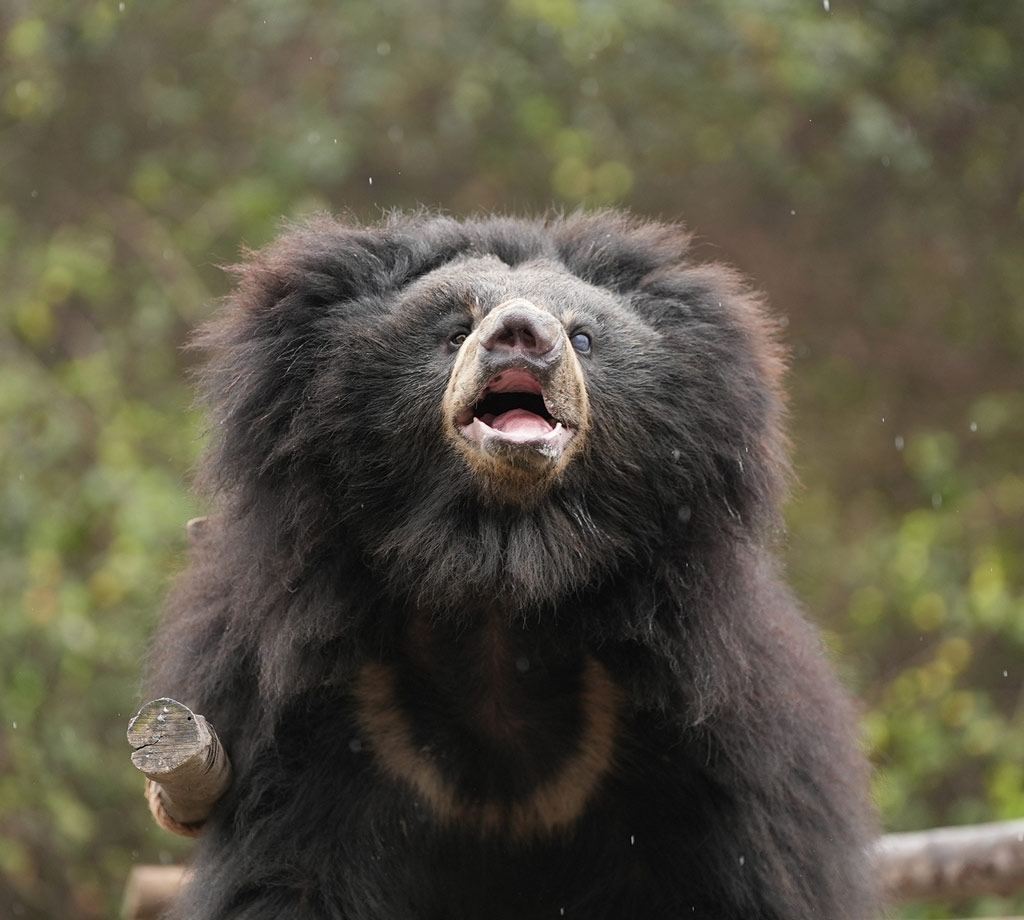
For countless wild animals, freedom is a birthright that is tragically stolen by exploitation and captivity. Yet every rescue offers the possibility of a new beginning, a chance to rediscover trust, comfort, and the simple joys of living as nature intended. Few stories illustrate that transformation more profoundly than that of Gracie, a rescued sloth bear whose journey has touched hearts around the world.
The images and videos of Gracie settling into her new life have resonated with millions, not because they tell a story of rescue alone, but because they reveal something deeply universal: the remarkable capacity to heal.
Watching her slowly embrace safety after years of hardship reminds us that compassion is more than an act of kindness; it is a force that restores dignity, nurtures resilience, and offers hope even to the most wounded lives.
Gracie’s recovery also highlights the vital work of wildlife rescue organizations and the ongoing need to protect animals from cruelty and exploitation. Her story challenges us to see wild animals not as attractions or commodities, but as sentient beings capable of fear, joy, grief, and recovery.
In this exclusive interview with The Eden Magazine, Nikki Sharp, Executive Director of Wildlife SOS, shares the story behind Gracie’s remarkable rehabilitation, the emotional journey rescued wildlife often experience after captivity, and why one bear’s path to healing has inspired such an extraordinary outpouring of compassion across the globe.
Caring for rescued wildlife can be emotionally intense for rescue teams as well. How do the caregivers and veterinarians at Wildlife SOS balance the emotional side of this work while helping animals heal from severe trauma?
There’s no doubt our team sees some horrible things and some tragically sick animals due to abuse and neglect. This work takes a caring and empathetic personality, yet requires unimaginable strength. Most of us find peace and solace seeing the small changes in the animals we’ve rescued … when the animals exhibit wild behaviours like foraging, social interaction with other animals, and all the wild traits they were deprived of during captivity. Our goal is to help their fears fade, and foster the bears’ physical and mental recovery so they can simply start acting like wild bears again … to dig, forage, and roughhouse with other bears, knowing the security and companionship they’ve never had.
Looking ahead, what are the biggest priorities for Wildlife SOS in continuing to protect sloth bears and prevent future cases of exploitation and captivity?
Our biggest priorities are focused on 1.) Working with the Kalandar communities (those who for centuries ‘danced’ bears.) Our programs ensure that the Kalandar communities do not revert to utilizing poached sloth bear cubs to earn money as dancing bears. This includes programs that educate children, empower women, and oversee vocational training programs that ensure men have livelihoods that can support their families. 2.) We have anti-poaching networks that work in the fields to track the illegal wildlife trade. This helps ensure that cubs aren’t poached and sold to buyers for use in dancing. 3.) Ultimately, we want safer places for sloth bears to thrive, and we are working on helping them in the wild by working to help reduce conflicts between bears and people and partnering with the government to create more places or sanctuaries for bears. With this effort, we’ve seen the creation of more protected areas for sloth bears. 4) Ongoing research and study to help wild bears thrive in their ever-shrinking habitat.
For readers who may be discovering Gracie’s story for the first time, can you share what her life was like before she was rescued by Wildlife SOS?
Gracie’s life as a ‘dancing’ bear was very difficult. She was poached from the wild as a cub. This process usually involves killing the mother because mother bears will fiercely defend their young. She was then sold to somebody who would have smashed out her teeth and used a red-hot metal rod to pierce her sensitive muzzle, where a rope was threaded through. This rope is how she grew up to be controlled. Whenever someone pulled on the rope, the pain Gracie experienced would make her stand on her hind legs. Gracie, standing on her hind legs and stepping side to side, was the act of ‘dancing’. The person who ‘owned’ her would drag her from village to village and have her perform, and many times for pictures. He would get tips from those who watched the performance. Because her teeth were violently removed, her diet would have been limited to whatever soft scraps of human food she was given. She was not allowed to forage like a wild bear. She is also blind in one eye, likely from an untreated infection due to an inflicted injury.
Wildlife SOS has played a major role in ending India’s “dancing bear” trade. Can you explain what that practice involved and why it caused such profound physical and emotional trauma for sloth bears?
The “dancing” bear practice existed in India for centuries and primarily involved sloth bears. The process began with poachers taking bear cubs from the wild, often killing the mother in the process. The cubs were then sold into the trade and trained to perform on the streets as so-called dancing bears.
To control the bears, their muzzles were painfully pierced so a rope could be threaded through the sensitive tissue. As the bears grew, this piercing was often repeated multiple times. Many bears died shortly after the procedure due to infection, trauma, malnutrition, or the severe stress they endured. Those who survived suffered both physically and psychologically from years of abuse, confinement, and fear.
When Wildlife SOS began its efforts to end the practice, it was estimated that hundreds of sloth bear cubs were being lost from the wild every year. In the late 1990s, more than 1,000 dancing bears were still being used on the streets across India.
Although Wildlife SOS has nearly eradicated the dancing bear trade, cases like Gracie’s still occasionally emerge. What does her rescue reveal about the lingering challenges of fully ending wildlife exploitation?
When we rescued the last dancing bear in India, we knew there would still be ongoing challenges in protecting that achievement. Because the practice continued in neighboring countries like Nepal, we understood there was always the possibility of bears being brought back across the border into India. That meant continued collaboration with government agencies would be essential to preventing the trade from resurfacing.
We also recognized that conservation victories cannot simply be declared permanent and left unattended. Lasting progress requires ongoing resources, vigilance, and community engagement. There will always be lingering threats to wildlife protection efforts, but long-term success depends on strong partnerships between governments, local communities, and conservation organizations working together to safeguard these animals for the future.
Many people have responded emotionally to videos of Gracie online. Why do you think her story has resonated so deeply with audiences around the world?
I think there is something very powerful about her story. Her freedom was stolen from her as a cub, and then she spent years living at the end of a short rope; everybody in her life was indifferent and callous to her well-being and needs as a bear. When that rope was cut from her nose, and she knew her life was different, and she seemed to delight in being a part of the world, I think it resonated so deeply because you couldn’t help but be so happy for her, yet feel heartbroken over what she had suffered through all of those years. Along with the excitement and joy Gracie was exhibiting in the video, she was also showing tragic signs of anxiety and trauma. There is so much to be observed in the videos, and they’re so emotional.
When animals like Gracie arrive at the sanctuary after years of captivity, what are some of the emotional or behavioral signs that reveal the trauma they’ve experienced?
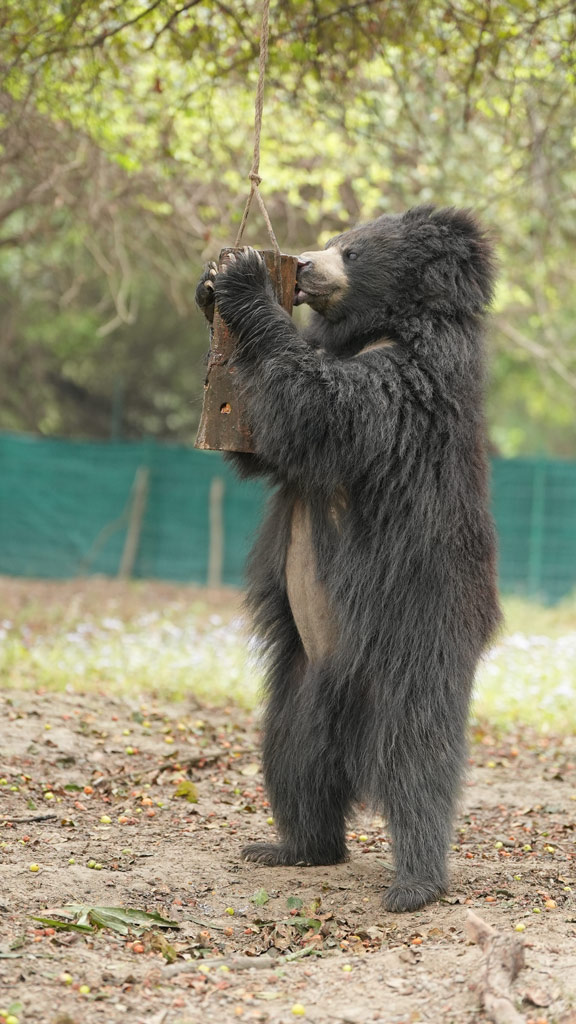
Although Gracie hasn’t exhibited a lot of these signs, we have seen bears that are so shut down from their life of abuse that they will stand in one place for hours at a time and sway and swing their head from side to side. This is often called stereotypic behavior. It isn’t just seen in our rescued bears; I see it in a few of the elephants as well. Many of the bears have had their teeth knocked out, and of course, this makes it harder for them to eat. Most of these bears require a lot of root canals and specialized porridge. Seeing these additional medical issues is a reminder that there are so many traumas they endure that we just don’t even know about. We often know that bears are starting to feel healthier when they interact with our other bears and start behaving more like a wild bear would. Gracie is slowly becoming more comfortable and relaxed when her caregiver is around her. She is learning to trust him. If more than one or two people are around, Gracie’s anxiety increases significantly, and she shows signs of “performing” for the crowd. So obviously, we keep her exposure to humans very limited.
Gracie still displays some movements associated with her former life as a dancing bear. Can you explain why those behaviors remain, and what they tell us about the long-term psychological impact of captivity?
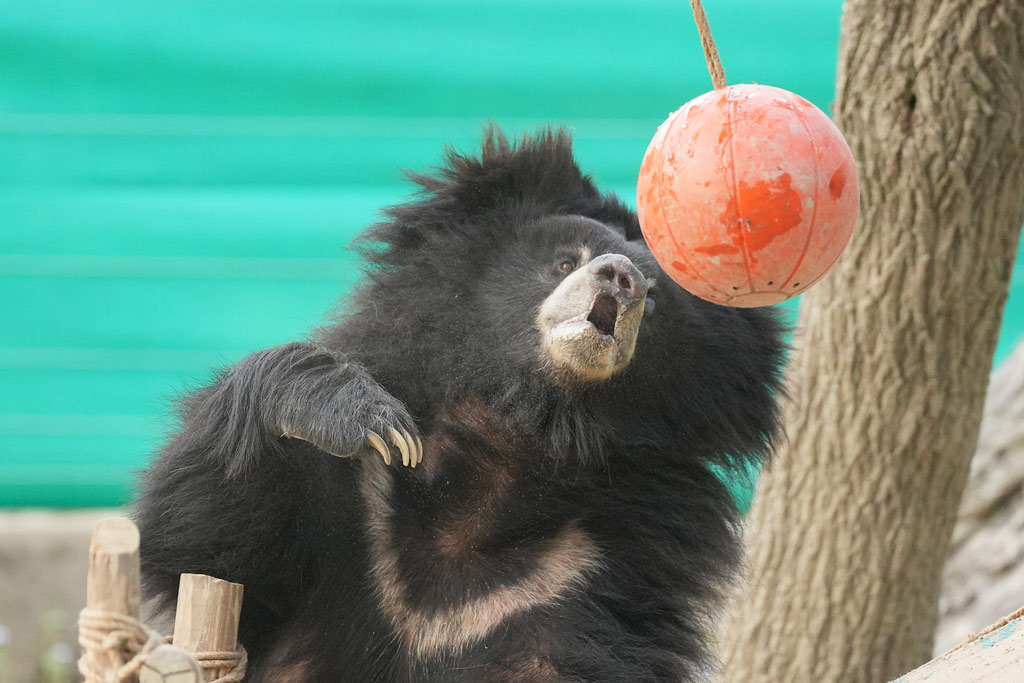
Gracie has been negatively conditioned to stand on her hind legs and perform. This is something she was forced to do from a few weeks old and continues to do today, a few months after her rescue. We expect this behavior to subside over time, and it can take years for her to understand that she doesn’t have to exhibit this behavior anymore. As she starts engaging in more normal bear behaviors, like digging and climbing trees, she will hopefully demonstrate less of this behavior. Not only does she no longer have a rope in her nose, but she is no longer walking on the road or around human communities. She is in a forest with other wildlife, as she hears fewer sounds like car horns and loud music, and hears more birds, monkeys, or just quiet and stillness. We will see her become healthier as she embraces her new home in the forest.
Rehabilitation is often thought of in physical terms, but how important is emotional healing in the recovery process for rescued wildlife, and what does that journey look like for a bear like Gracie?
Emotional healing is the most important part of a rescued animal’s recovery, where the animal comes from a life of cruelty and exploitation. This is also the most difficult part of their rehabilitation, especially when that animal has suffered for many years, as Gracie did. In Gracie’s journey, much of her emotional recovery comes in two ways. First, she is no longer under the constant threat of being in pain, so she can start to trust her environment and the people around her. Her sense of feeling safe then allows her to explore the world of being a bear. What I mean by this is that she hasn’t been able to climb trees, interact with other bears, or learn foraging behaviors. Now she can, she can make her own choices and discover for the first time what it means to be a bear.
Gracie’s tentative 90-day quarantine period will be over soon, and she will be socialized with other bears. This is a critical part of her emotional rehabilitation that can’t be taken lightly because she likely hasn’t ever been exposed to other bears since she was stolen from her mother. And of course, treating her painful wounds and malnutrition is an important step in improving her emotional well-being.
Through stories like Gracie’s, what do you hope people begin to understand about compassion, coexistence, and our responsibility toward vulnerable animals?
We often see animals being exploited, and sometimes don’t realize that is what we are seeing. People are often posting pictures on social media of themselves holding tiger cubs, exotic birds on their shoulders, or large snakes. Or people will take vacations where they can ride elephants and swim with dolphins. What I’d love for people to know is that so many of these animals are poorly treated to get that ‘photo’ or that vacation thrill. If people understood that paying for those animal experiences creates demand for more animals to be captured and mistreated for profit, I think significantly fewer animals would be suffering. Our red-flag rule is if people are able to paint, bathe, ride, feed, pose, or touch wildlife, the tourist attraction is contributing to the cruel exploitation of animals and shouldn’t be supported.