
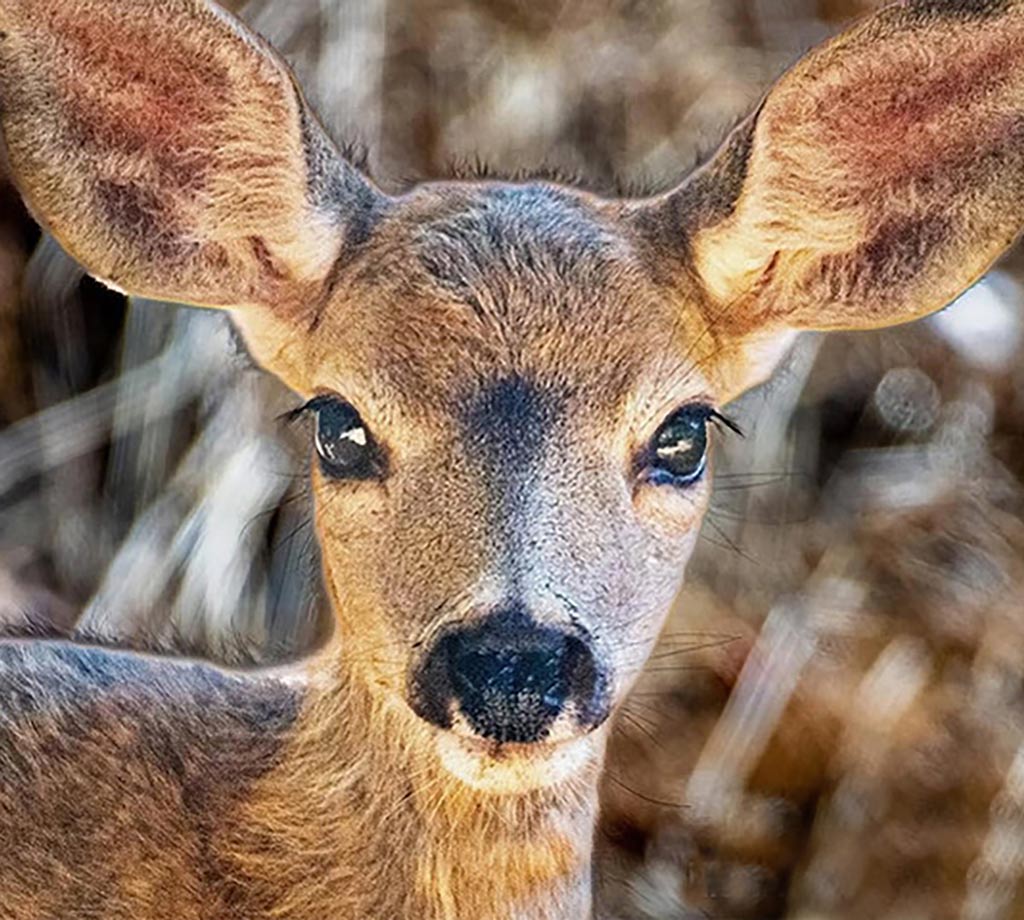
If the Catalina Island Conservancy has its way, Catalina Island’s entire population of mule deer, introduced to the island almost a century ago and now 1,000 to 2,000 strong, will be exterminated, almost every one shot by hired guns. The killing, permitted by the California Fish & Wildlife Service, has already begun as of September 1st.
About 30 deer each night are lured out of the woods with food on the ground in clearings, then shot to death. The first 200 will be dead by November, ending the first phase of the Conservancy’s 5-year deer eradication project. The killing will continue in 2027.
Judging by years of rancorous Avalon town hall public meetings, and a large and quickly growing opposition movement across California, both islanders and off-islanders are outraged. Many people are questioning the Conservancy’s justifications for the extreme and brutal nature of the killing campaign that it variously calls a deer “cull,” a deer “removal,” or even, stretching language to the Orwellian, a “habitat restoration.”
Presumably this is a “restoration” to before 1928, when the mule deer were introduced. But they don’t explain why this specific time stamp is the one to (lethally) reset to using biological or evolutionary science. Their assertion ignores the fact that the last century of Catalina’s development by, for, and with humans isn’t “native” either.
As with the U.S. Fish & Wildlife Service’s current killing of 1/2-million barred owls for “invading” 22,000,000 acres of California, Oregon, and Washington forests, which also justifies killing as “restoration,” there is no exact scientific definition of “native” or “non-native.” All plants, animals, and organisms are constantly on the move; movement, change, adaptations, hybridizations, extirpations, and even extinctions are the very nature of nature.
Nor is there hard science backing the Conservancy’s other claim designed to frighten the public into grudging acceptance of Catalina’s deer extermination: that deer eating “native” plants indirectly causes a calamitous increase in wildfire danger.
Los Angeles County Fire Chief Anthony Marrone contradicts this claim, on record, saying that killing the deer is just as likely to increase, not decrease, wildfire danger because deer reduce the amount of vegetation that is the fuel for fires. Fires do not selectively ignite, or distinguish between, so-called native and non-native plant species. Nor do they share the human bias against a species based solely on its country of origin.
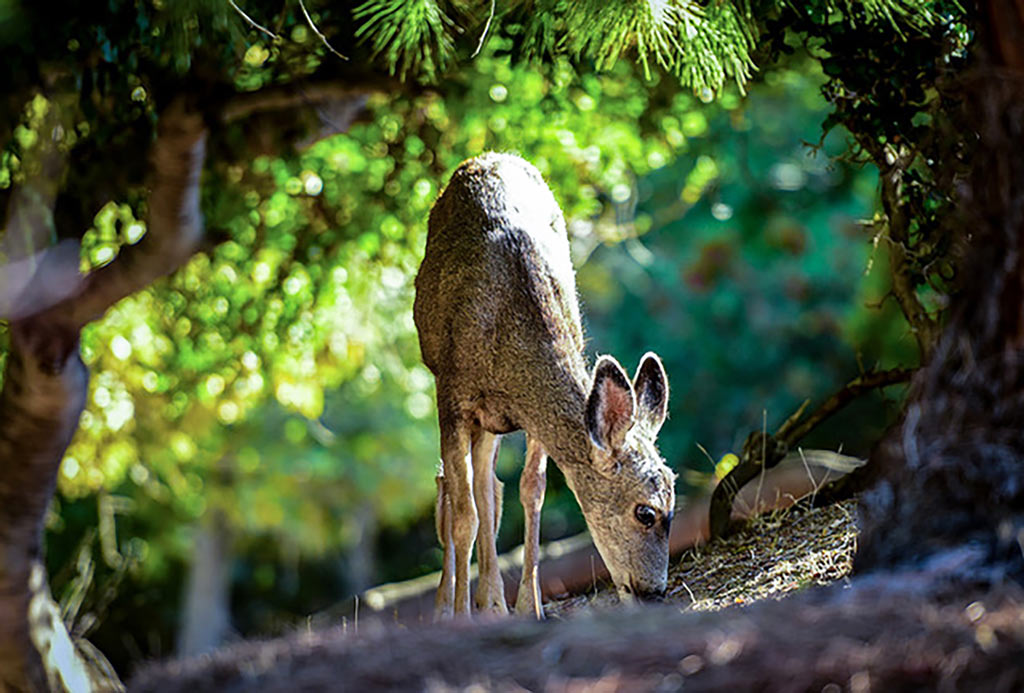
L.A. County Supervisor Janice Hahn, who has legislative jurisdiction and represents Catalina Island, has for years opposed the needless slaughter. Her voice helped quash The Conservancy’s original plan to shoot the deer from helicopters, which would have turned tranquil Catalina Island’s Blue Lagoon into a grisly cross between The Deer Hunter and Apocalypse Now.
There is much more to this story, including a lawsuit filed by a coalition of environmental, animal protection, and even hunting groups. And several active petitions, including an “alert” by this writer’s client, In Defense of Animals, petitioning Governor Newsom to defy his wealthy Catalina Island friends and yank the CFWS permit and halt the slaughter until at least a full, thorough Environmental Impact Report (EIR) is conducted. Under CEQA (California Environmental Quality Act) law, this was required but bypassed — by labeling the massive, multi-year deer killing a Habitat Restoration.
One final question to ponder: why is it that most “restoration” projects today entail killing huge numbers of wild plants (with herbicides like glyphosate) or animals (with pesticides, poisons, or rifles)? Do we really believe we can kill our way back to Eden?
by Jack Gescheidt
photos by Nick Morrow






Comments