

Rosanna Brown on Loss, Healing, and Hope
For many families, pregnancy is a time filled with dreams, anticipation, and hope. But when a devastating prenatal diagnosis changes everything, parents can suddenly find themselves facing an unimaginable decision, one accompanied by grief that is often deeply misunderstood and rarely spoken about openly.
Author Rosanna Brown knows this journey firsthand. During her pregnancy with her much-loved son, William, she learned that he had been diagnosed with the rare and fatal CHAOS syndrome. Continuing the pregnancy would have placed both Rosanna and her baby at significant risk, ultimately leading her to make the heartbreaking decision to undergo a termination for medical reasons (TFMR).
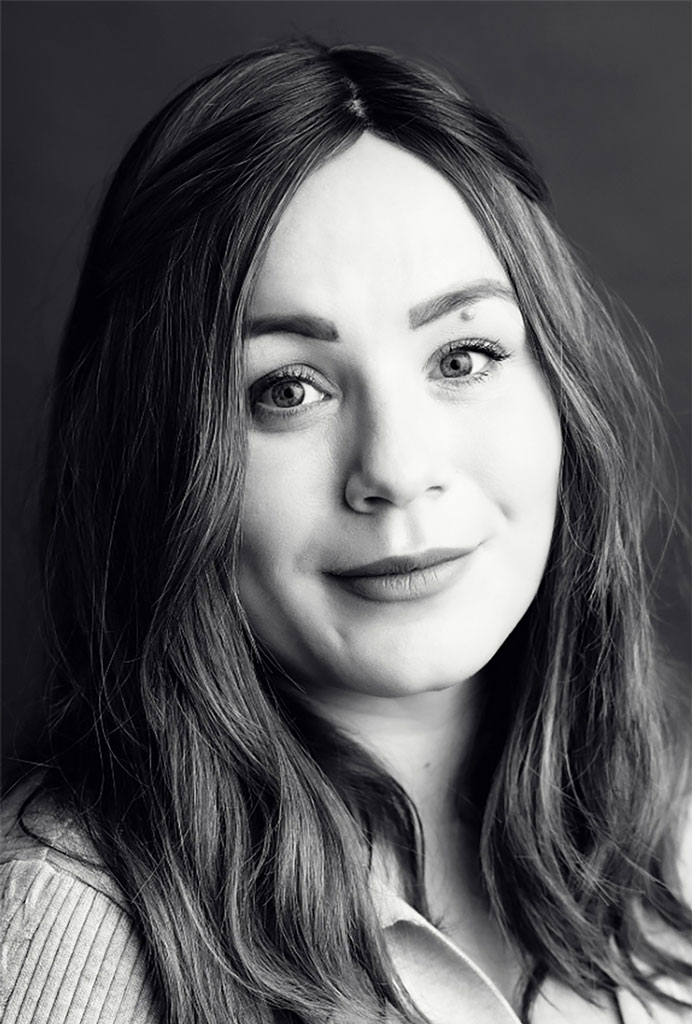
Rosanna Brown is a former English teacher who lost her son in September 2023. The experience left Rosanna carrying profound grief and PTSD. Through therapy, time, and an extraordinary process of rebuilding her life, she gradually found a path toward healing. Today, she is also the mother of a six-month-old daughter. She uses her experience to advocate for greater understanding, compassion, and support for families navigating prenatal diagnoses and baby loss.
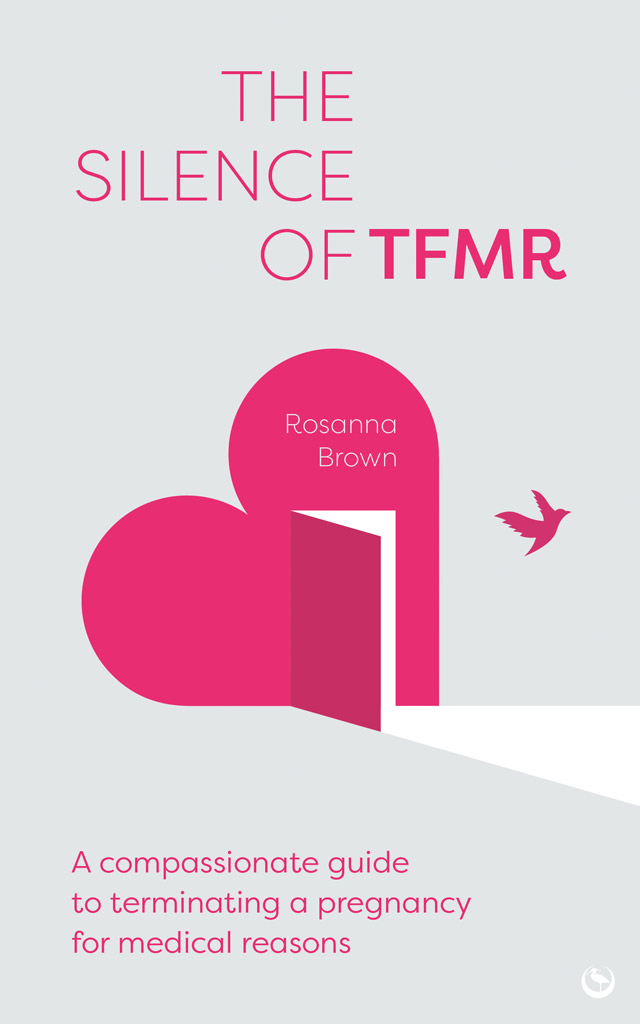
The Silence of TFMR is for families facing termination of pregnancy for medical reasons, where Rosanna brings together her lived experience with medical insight and practical guidance, helping to shed light on a subject that remains difficult for many people to understand or discuss.
In this conversation with The Eden Magazine, Rosanna opens up about hidden grief, trauma, healing, pregnancy after loss, motherhood, and why no family should have to face such an unimaginable experience feeling alone.
The book is available for pre-order in print and eBook, with an audiobook edition from Podium. It is due to be published on 6 October. See more at @thesilenceof_tfmr.
Your journey with William is at the heart of The Silence of TFMR. Can you take us back to the moment you learned about his diagnosis and what those first days were like for you?
I can picture the exact moment that I learned of William’s diagnosis. We were in the consultation room, the clinical bright lights snapping through the air and the cold buzz of the city hospital breathing in the background. It all seemed so mechanical and scientific. Yet, out of the window, there was the most beautiful oak tree, glowing with the colours of autumn. And, as the consultant spoke those dreadful words – that our son would suffocate to death if we had him at full-term – I remember watching the morning sunshine flickering through the tree’s leaves. My mind raced. How can nature be so beautiful when it can also be so ugly and cruel?
The days that followed were a complete blur. Just thinking about what was going on inside my body split me in half. How can you describe what it feels like to carry life inside of you, when that life will never get to live? It was incomprehensible to me. My son was still with me and still part of me. But every kick and every somersault suddenly transformed joy and excitement into the deepest anguish and pain. I would have given anything for my son to live. But all I wanted was for him to die on his terms. I wanted him to stop kicking and to make the choice to leave us, on his own. I didn’t want to have a termination. An abortion. I didn’t want to do this. And I couldn’t comprehend that I would have to. But how could we let our baby suffer? Who would ever choose to let their only child suffocate to death?
All I could do was exist alongside these thoughts. And so, my husband and I simply moved like ghosts, in the memory of our old lives. Nothing felt the same. We couldn’t talk. What was there to say? We wandered aimlessly around the house, staring out of windows – at walls. We would go out for long walks with the dog – just to escape the confines of our minds. We would find each other alone in the garden – or in separate rooms of the house – and unable to do anything more than hug one another, we would both break down in tears and then break apart. We knew this couldn’t last. We couldn’t
exist in this no-man’s land forever. The only way was forward, and we knew we would have to take action.
TFMR is still something many people know very little about. What do you wish more people understood about the emotional reality of ending a much-wanted pregnancy for medical reasons?
For me, the biggest thing that I want people to understand is that this is a decision made only out of love. It is loving someone with the most broken and helpless heart in the world. It is never a decision made lightly, or without any care or compassion for the baby. And it is not the ‘better choice’ either – even if terminating means a baby won’t suffer. Because it is still the most dreadful, most heartbreaking choice a parent can ever make. I think so often we hear of people terminating their pregnancies, and the reaction can be so dismissive, with people assuming that – because parents chose to terminate- they didn’t love their baby as much as parents who chose not to. And that feels so hurtful and invalidating. I often don’t see a space for my grief. Instead, I see my grief judged or criticized. I even see my grief measured against the grief of ‘real’ people who had ‘natural deaths.’ I am stuck within the science of a choice that I never wanted to make – when all I want to say is that he was my baby and that he is loved and missed beyond words.
Not only this, but the pro-choice and pro-life debate can be so incredibly harmful to TFMR parents. And I have always been pro-choice. But, going through TFMR meant that this choice was repeatedly politicised – and neither side of the debate seemed to access the depth of pain and love that I felt. There was the one side of the debate, which did not see my baby as a real baby. And then there was the cruelty of the other side, who would seek to vilify me for having an abortion. Neither held space for me or other TFMR parents. Neither stopped to recognize that TFMR parents deserve to be held in grief, as parents to a child who has died. And so, it leaves us with nowhere to go with the feelings we have. And, in turn, only serves to silence us further.
You have spoken openly about experiencing profound grief and PTSD following William’s loss. How did that trauma affect your everyday life, and what was the hardest part of your healing journey?
Trauma impacted every aspect of my life. But for a while I thought that I could handle it – and to be honest, didn’t even understand the impact it was having on me. I think there was pressure, both internalised and externalised, to go back to the young woman that I was ‘before.’ And I tried to slip back into my old life very quickly. As soon as the funeral was over, I continued with the same routines. I went back to work. Met up with the same friends. Continued with the same hobbies. But none of this felt the same, and I really struggled. I was just so tired and run down all the time. I wanted more than anything to hide away from the world because I just wasn’t me anymore, and so my old life – and every aspect of it – felt like a performance. I was acting the part of ‘old me’ and repeatedly losing her every time I tried.
I think this was the hardest part: losing the old me. In some ways, I still miss her – even though I now find her incredibly naïve and annoying! But I miss the fact that I could hold so many things in my head all at once, whereas now I struggle with brain fog and ‘can’t exist without a list!’ I miss my ability to manage stress at a high level without taking a break. I miss how carefree I was. How innocent. It’s taken a long time to accept all the things about myself that have changed. But as time has passed, I think that trauma has enabled me to empathise more deeply. It has made me less willing to put up with shit. It has made me more determined to fight against injustice, however that looks. I feel like I have aged a thousand years (and I think it shows), but as my healing journey has gone on, I have tried to be grateful for everything that William’s loss has shown me about myself. I am a completely different person now, and I am learning to like this person. Plus, I am incredibly grateful to have such amazing friends and family who have loved every version of me, regardless.
Therapy played an important role in helping you rebuild your life. Was there a particular moment, realization, or therapeutic approach that helped you begin to see hope again?
I don’t think there was a particular approach or moment. For me, it was a very long process – and a journey that I continue to go backward and forwards on. And I think it was being held on that journey that eventually got me through. My therapist specialised in trauma, alongside pregnancy and post-abortion loss – and so she absolutely understood the impact of what I was going through and how fundamentally life-changing it was. She repeatedly reminded me that my grief didn’t have a finish line – and that my value was not reliant on what others thought about my choices or the way I was grieving for my baby. There was simply no judgment from her. And that was incredibly helpful when I was being judged by so many others.
How did you navigate the complicated emotions that can come with pregnancy after loss, including fear, hope, guilt, and the worry that something might go wrong again?
Gosh. Pregnancy after loss is complex. It’s the fear… and the fact that there is no guarantee. You know, we had a miscarriage after William – so I quickly learned that another pregnancy does not mean a living baby. With my third pregnancy, I struggled to talk about it – especially early on. I didn’t tell very many people until it was hard to hide because I couldn’t deal with the excitement and the joy, in case this baby died too. And that was awkward. Other people often just don’t understand why you can’t show your joy. I think they just want the next pregnancy to ‘fix’ everything for you. And it just didn’t feel like that for me at all. All I wanted was to hide away and make it through. To be honest, I spent a big chunk of the pregnancy snuggled up under a blanket binge-watching Desperate Housewives, and that remains one of the best decisions I made!
I think, as a TFMR parent, there is also an additional fear around scans. You know, for most of us, it’s scans that first revealed any issues. And so, we just have this terror and expectation that we will face the same problems again. In many ways, walking into scan rooms is like walking into the source of trauma – and actively choosing to do so when every fiber in your body is telling you to turn and run. It is so complex. I would be in absolute pieces every time, physically shaking from the fear and unable to think or behave rationally. I could so easily have said ‘no’ to every scan we were offered. But something inside me told me that I just had to do it. I had to tell myself that this little baby deserved their medical check-ups. You know, if this next baby was poorly too, then they deserved for doctors to know – and for a plan to be created so they could be given the best possible chance. In the same way I would take a full-term baby to the doctors for their standard health checks, this baby deserved their basic healthcare. So, I just had to put my big girl pants on and do it. But I will never forget the fear.
I think the only coping mechanism that I actively adopted (aside from hours of therapy!) was repeating the mantra ‘dare to hope.’ Those words gave me a certain element of control. You know, I could feel all the fear. I could feel the worry. The anxiety. But I could also allow myself hope. And because hope is something so fleeting – it’s not tangible or physical, and we can’t grasp onto it – it made me feel like I could hope in a way that felt helpful to me. I could feel hope alongside fear – and that was okay, and neither needed to taint the other. It just felt like a tiny bit of happiness that I could give to this baby – and I so desperately wanted them to know that there was happiness for them – even if their parents I couldn’t give in to it in the way other expectant parents can.
You are now the mother of a beautiful daughter. What has becoming a mother again meant to you, and how has William’s memory remained part of your journey as a mother?
Becoming a mother again has been a beautiful experience for me. And I know how lucky I am to be able to say that, as many TFMR parents do not go on to have another baby – and that is something that I know I would have struggled with. Because William’s little sister is everything. Magic. Joy. Happiness. Sparkle. All that I could ever have wished for. I would die for her in a heartbeat, over and over again. And whilst that is hard to live alongside because I couldn’t die for William, it is even more reason to live for her.
Losing William in the way we did has made me adamant to be the best mum I can be to my little girl. I just want her to be the happiest, kindest, most loved child in the world. And I want her to know that she is loved in her own right; that she will never be a replacement for her brother and that she was always meant for us. I never want her to feel like it’s been her job to ‘fix it’ or to take any of our pain away. I don’t ever want to put that on her. And that is hard when others often assume that because you’ve had another baby, everything is fixed. And yes, I have felt happiness again: sheer happiness. But that doesn’t mean William didn’t exist or that I don’t grieve for him every single day. So, I tell myself that all all I can really do is advocate for him as my son … and her as my daughter. And for them both as my children – in their own right.
And I do think William has influenced the way I parent my little girl. I feel so much responsibility to her, beyond what I may have felt had I not lived through losing her brother. I see her not just as my baby – but also as a girl growing up in today’s society. And I want her to know her rights – and to always advocate for the rights of others – especially in this ever more divisive world. In turn, this has made me much more aware of my role as a woman and as a mother. I want to be present for her. I want her to come first, above everything else, every time. I want to be the person she comes to with her worries. I want to be her advocate and confidante. And I don’t want to allow other life pressures to consume me. Yes, earning a living is important, but I want to make sure I’m home to cook her dinner – that I can attend every school show or parents’ evening. I want her to know that I will always be there for her, in the big things and the small. And I think that’s William’s gift to her. He made me understand that being a parent is the most important job I will ever have.
In writing The Silence of TFMR, you brought together your personal experience with medical insight and practical guidance. What did you discover through writing the book that you wish you had known when you were facing William’s diagnosis?
Well, aspects of the book are my journal entries – so it really does follow my journey and what I was facing, as I faced it. You know, I was learning things as I was feeling them and finding them out for myself. And I suppose it was only through turning my journal into a book and reflecting on everything that we went through that I was able to truly comprehend how complex this type of loss is. There are just so many facets to it: the decisions, the science, the pain, the grief, the trauma, religion… politics. They’re all there and all such a huge part of the journey. And I literally had no idea. I genuinely thought TFMR was something that I would just ‘do’. That it would be awful and devastating and tragic. But that I’d be able to move on from it afterward. I just couldn’t understand the depth of what we were going through at the time we were going through it.
And so, I think the biggest thing I discovered from this project probably can’t be pinned down to one single thing. Because it is all so huge and life-changing. However, after talking to so many parents from so many different countries and cultures, the main thread of our conversations always boiled down to the same thing: the lack of support for TFMR parents as they navigate the multiple complexities of this journey. Not just medically, but psychologically, emotionally, physically, societally, there’s just not enough help out there in the aftermath. You know, so much of it costs money. So much of it depends on location. So much of it depends on your hospital, or the laws in your state. And all I can say is, I wish I had known. I wish I had known that the aftercare would be almost non-existent. I wish I’d known how to support myself better. And I wish I’d known that this is a long-term choice, that the healing journey will never be finished. And I wish society were better set up to support parents like me.
Why do you think families experiencing TFMR or other forms of pregnancy and baby loss can feel so isolated or misunderstood, and what can friends, family members, and society do differently to support them?
With any form of baby loss, I think there is a sense of being the only one who has gone through it. Even though baby loss is extremely common, it’s not a type of loss that people are always comfortable talking about – perhaps because of shame, or if the pregnancy hasn’t yet been disclosed. As a woman, there’s perhaps a sense of failure too. You know, you feel responsible for not being able to carry the pregnancy to term, or for not being able to save your baby. In TFMR, this is perhaps exacerbated – because so often medical professionals can’t say why your baby was so poorly. So, I think mothers often internalise that – which in turn creates a much deeper level of guilt and shame.
I think there’s also a pressure to cope because it is not a grief that everyone goes through. You know, we sadly all expect to lose the family members who are the generations above us – but when you lose a baby, it doesn’t follow the ‘typical’ pattern. It’s grief of a future that never happened- a person that no one else met. Often, this means that no one else can tap into it, apart from the parent themselves – and that can make it feel very much more insular and lonely. And so, parents feel like they must ‘crack on’ and, if they can’t, there’s often judgment. I actually wrote a piece on this a few years ago. I wrote about how toxic the word ‘resilience’ is. You know, society paints a picture of resilience as a person who can just keep going; who can put the mask on and not give in to the pain. And it praises this. It needs grievers to be outwardly ‘fine’ because generally people aren’t comfortable to sit with the emotional pain and distress of another person. So, you get comments like, ‘It’s so good to see you doing better…’ or ‘You’re so strong and brave.’ But this perception of resilience is so harmful. You know,
grievers don’t have a choice but to keep going. In fact, they may be struggling the most they ever have – but if there is an external pressure to hide this – then they can never truly process it. So, as time has passed, I’ve come to see how toxic it can be to link grief with resilience at all. Instead, I’ve learned that it takes a lot of strength to give in to the pain, and that can be a form of resilience too.
So, I suppose that would be my advice to others. Just step back and try to understand what the grieving person is going through. They are neither strong, nor weak. Instead, they are being confronted with feelings so extreme – and ones that they have probably never felt before. And that’s complex. So just give them time. Understand that it is a process and that they may go backward and forward on this journey. And understand that they may be outwardly fine but still struggling, even when they’re smiling. None of this is to do with resilience. Instead, they just need to be emotionally held – wherever they are and however their grief presents. So be patient. Keep checking in. And please don’t judge!
After everything you have experienced, what does healing mean to you now, and what message of hope would you most like readers of The Eden Magazine to take away from your story?
For me, healing has been coming to a place where I have finally been able to accept my grief as a part of me and have been able to find a place to hold it. Like, it really did feel that I needed to find a space, in my body and in my soul, to keep William. I don’t know if that makes any sense. But, I needed to feel the pain in every possible way I could. I needed to go to the very depths and explore every possible emotion and connection to him, so that I could work out what to do with my love for him. And now, I know what to do. I know where to find him. I truly believe that he lives through me and our family, and I just try to keep making him a small part of our lives in whatever way I can. I keep talking about him. I plant flowers in the garden for him. I put little blue and pink hearts at the end of texts, just as a little nod to him and his sister. And I laugh again. Truly, I do. I mean, dare I say it, I am the happiest I have ever been. And there was a time when I could never have imagined uttering those words – and when those words would have felt such a betrayal of William. But I don’t see it like that anymore. Instead, I feel that William taught me just how precious happiness and laughter are – and so I try to feel it as often as I can. And I suppose that would be my piece of hope for someone else: there is happiness still to be found. You will feel it again. You will laugh until your tummy hurts. And you will find joy in the other beautiful things that are coming your way. But you will always hold a space for your grief.
When you’re not writing or supporting other families, what are the little things in everyday life that bring you the most hope these days?
The little things for me really are the big things. It’s getting out into nature and accepting its beauty again. It’s feeling the sunshine and the rain on my skin. It’s in watching a sunset or a sunrise. It’s cuddling up with my husband by the campfire and looking for stars in the night sky. It’s walking the dog and cuddling our cat. It’s listening for wind chimes. It’s looking for the signs of
William everywhere: the little robins, the snowdrops, the rainbows, and the white feathers. And it is in seeing my little girl’s face.
If you could give your younger self one piece of advice, not about grief or loss, but about life in general, what would you tell her?
It would be to trust yourself. Whatever the situation, the person, the circumstances- just trust yourself. You have never been wrong. You have insight – if only you would choose to listen to it. That gut instinct is telling you something. And if something doesn’t feel right, it probably isn’t. So, trust it. And know your worth. You have the power to make change. And you have the strength to fight. So never let anyone make you feel inferior, weak, or unentitled to your truth.
Photos by Kale Jerielle and Nichiiro





Comments