
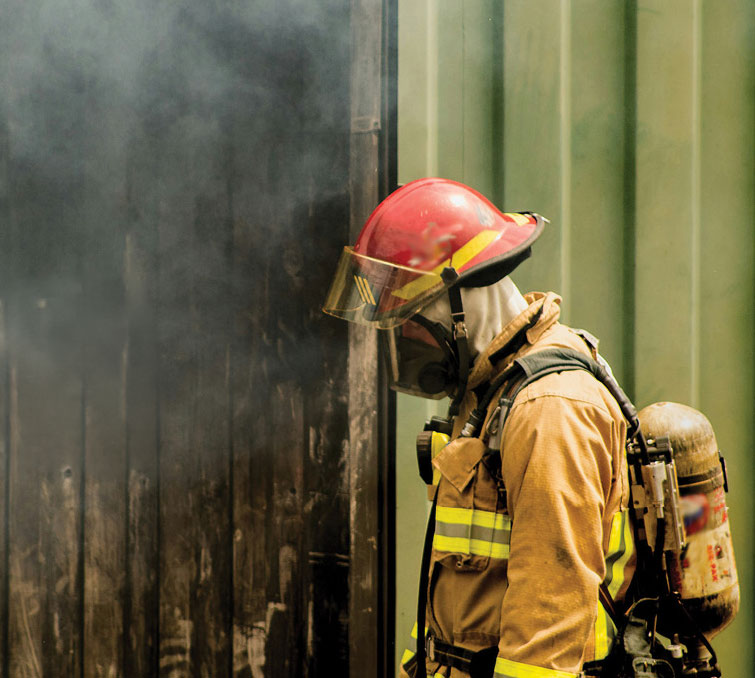
For most of my adult life, I was trained to move toward other people’s emergencies.
Fire. Injury. Loss. Fear. Violence. Grief. Families standing in the worst moment of their lives, looking at us to bring order to chaos. That was the job. That was the calling. You put on the uniform, answer the tones, and move toward what everyone else is trying to escape.
For thirty years in the fire service, including twenty-three years with the Long Beach Fire Department, I learned how to stay calm when the world was coming apart. I learned how to read smoke, read danger, read a room, and make decisions under pressure. I became a firefighter, a paramedic, and eventually a captain.
I was proud of that. I still am.
But there was another emergency building quietly inside me.
That is the one I did not know how to answer.
My memoir, The Last Patient, grew out of that realization. It is not a book about glory. It is not a polished hero story. It is a story about what happens when the person trained to save everyone else finally has to face the truth that he is the one who needs saving.
That is a difficult truth for many first responders, veterans, caregivers, clinicians, and high-stress
professionals to admit. We are often rewarded for staying strong, staying useful, and staying quiet. We learn how to function while carrying what we have seen. We learn how to walk out of someone else’s tragedy and drive home as if nothing followed us.
But something does follow us.
Sometimes it follows us into our sleep. Sometimes into our marriages. Sometimes into our parenting. Sometimes into our health. Sometimes into addiction, isolation, anger, anxiety, or silence. Sometimes it shows up as the favorite chair in the house where a person disappears, physically present but emotionally gone.
The public sees the uniform. They see the red lights, the rescue, the ceremony, the handshake, the bravery. What they do not always see is the cost paid by the person inside the uniform and by the family waiting at home.
That hidden cost is one of the reasons I wrote this book.
I wrote it for the first responder who keeps showing up while privately falling apart. I wrote it for the spouse who has learned to read the mood before speaking. I wrote it for the child who senses that something is wrong but does not yet have the words. I wrote it for the veteran, nurse, dispatcher, police officer, medic, clinician, and exhausted leader who has carried more than they were ever taught how to release.
I also wrote it for anyone who has been crushed by life and wondered if there is still a way back.
I believe there is.
But the way back requires honesty.
One of the hard truths I had to accept is this: trauma may not be your fault, but recovery is still your responsibility.
That sentence can sound harsh if it is heard through shame. I do not mean it as blame. I mean it as a doorway.
For years, I wanted the world around me to understand what had happened to me. I wanted the system, the job, and certain people to acknowledge the damage. Some of that was legitimate. Some of that also kept me waiting. At some point, I had to stop waiting for perfect understanding before I began the work of healing.
The rescuer had to become
responsible for saving himself.
That is what I mean by “the last patient.”
In emergency work, we are trained to assess everyone else first. We check breathing. We control bleeding. We protect the scene. We start treatment. We solve the problem in front of us.
But many of us never turn that same assessment inward.
How is my breathing?
How is my sleep?
How is my family?
How is my anger?
How is my drinking?
How is my relationship with faith?
How is my relationship with myself?
Those questions are not soft. They are essential. A person can appear strong while slowly losing contact with peace, purpose, and love. Strength without self-honesty becomes performance. Performance without recovery eventually becomes collapse.
My own collapse did not come all at once. It came through years of accumulated stress, injury, grief, addiction, career pressure, and unprocessed pain. I had childhood wounds that followed me into the job. Then the job added its own layers. For a long time, I believed I could outwork the damage. I thought discipline alone would save me.
Discipline matters. It helped me survive. It helped me become a firefighter. It helped me keep moving through difficulty. But discipline alone cannot heal a life. It can build the structure, but truth, humility, love, community, faith, and willingness must enter the room in equal parts.
That is where recovery began for me.
I went to a first responder-specific rehab, twice. I needed a new group of men focused on recovery in my life.
I got sober through Alcoholics Anonymous. I asked for help. I learned to sit with pain instead of constantly outrunning it. I began telling the truth about what I had seen, what I had done, what I had lost, and what I still wanted to become.
I learned that asking for help is not weakness. For a first responder, it may be one of the most courageous acts available.
Recovery is not one clean moment. It is daily work.
It is the meeting when you do not feel like going. It is the phone call when shame tells you to isolate. It is making amends when pride wants to defend.
It is the walk, the prayer, the breath, the glass of water, the honest conversation, the meal, the sleep, and the decision not to burn your life down because your nervous system is loud, constantly and always.
One of the core phrases in The Last Patient is:
Situation Screwed / Still Survivable.
That phrase became a lifeline for me. It means the facts may be painful, but the mission is not over. It means the marriage may be strained, the career may be damaged, the money may be tight, the body may hurt, or the shame may be heavy, but there is still a next right action.
There is still breath.
There is still help.
There is still a way through.
When a person is overwhelmed, they do not always need a lecture. They need a simple command they can carry out themselves.
Breathe.
Drink water.
Eat something.
Move your body.
Call someone safe.
Tell the truth.
Do not make a permanent decision inside a temporary storm. Life is always better when you stay here.
This is not medical advice. It is lived experience. If someone is in crisis, believes they may harm themselves or someone else, or is facing a medical or psychiatric emergency, they should call 911, go to the nearest emergency room, or call or text 988 in the United States and Canada. There is no shame in needing immediate help. Staying alive is the first mission.
Healing also requires us to look beyond the individual. Families and communities carry the impact of unprocessed pain. When a first responder, veteran, caregiver, or leader suffers in silence, the people closest to them often suffer too.
The answer cannot be shame. Shame drives people deeper into hiding.
The answer must include compassion, accountability, treatment, peer support, spiritual grounding, and practical daily tools. We need cultures where asking for help is not seen as failure. We need homes where honest conversations can happen before the damage becomes permanent. We need leaders who understand that human beings are not machines to be disposed of.
The fire service gave me purpose. It gave me identity, discipline, brotherhood, and some of the best people I have ever known. It also taught me that even the strongest people have limits.
That lesson did not make me weaker.
It made me more human.
Today, my mission is simple. I want to help the people who help everyone else. I want the wounded helper to know they are not beyond help. I want the family standing nearby to know their pain matters too. I want the person who has carried too much for too long to understand that recovery is not the end of strength. It is strength redirected toward life.
I am not perfect. Recovery has not turned me into someone untouched by stress, fear, grief, or uncertainty. It has given me a way to return to centered self. It has taught me how to pause, breathe, tell the truth, and take the next right action, no matter the fear.
That is how my life was rebuilt and yours too. Not all at once.
One honest step at a time.
If you are still here, that matters.
You are not finished because you are tired. You are not broken because you need help. You are not weak because life changed you.
You are responsible now, and that responsibility can become a form of freedom.
The life on the other side of survival is not perfect, but it is real and worth the effort. Family can be repaired. Purpose can be rebuilt. Faith can return. The body can grow stronger. The mind can quiet down. The heart can open again. Faithful trust steps are needed.
That is why I wrote The Last Patient.
Not to tell people how bad it got.
To show them there is a way back.
Situation Screwed / Still Survivable.
Take the next breath.
Then take the next right action.
by Captain James Owen, Retired Long Beach Fire Captain





Comments