
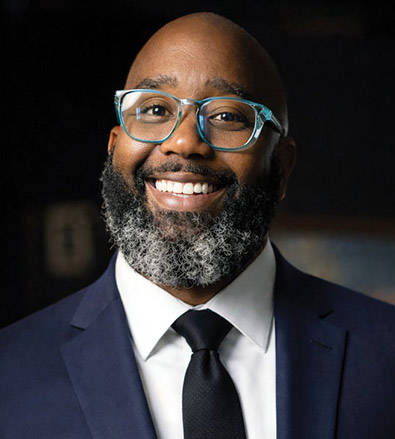
Where Storytelling Meets the Magic of the Stage.
There is something timeless about the theater, the moment the lights dim, the curtain rises, and a story begins unfolding just a few feet away. Unlike any other medium, live theater creates an intimate connection between storyteller and audience, allowing every emotion, every silence, and every moment to exist only once. In that space, writer and director Allen Brown II brings Aubrey’s Magic Alley to life.
A powerful, imaginative theatrical experience, Aubrey’s Magic Alley invites audiences into a world where reality and imagination intersect, exploring the emotions, dreams, challenges, and possibilities that make the human journey so compelling. Through Aubrey, Brown II creates a story that reaches beyond entertainment, encouraging audiences to see life, and perhaps themselves, with renewed wonder.
Adding to the production’s remarkable story is the involvement of acclaimed filmmaker John Singleton, whose groundbreaking work changed the landscape of American cinema. Best known for Boyz n the Hood, Singleton became the youngest person ever nominated for the Academy Award for Best Director and left an enduring legacy as a filmmaker who used storytelling to illuminate culture, identity, family, and the complexities of the human experience.
For Brown II, Aubrey’s Magic Alley represents more than a theatrical production. It reflects a belief in the power of stories to bring people together, challenge perspectives, inspire emotion, and create moments that remain with us long after the lights go down.
In this exclusive conversation with The Eden
Magazine, Allen Brown II takes us behind the curtain of Aubrey’s Magic Alley, sharing the inspiration that brought the story to life, his creative philosophy as a writer and director, his experience with John Singleton, and why the magic of live theater continues to matter in an increasingly digital world.
Please take me back to the beginning. What was Allen Brown II like before your career took off? What were you passionate about, and when did you first realize that this was the path you wanted to pursue?
For seventeen years, I had the privilege of working with at-risk youth within the system. During that time, I witnessed firsthand many of the challenges and circumstances our young people face as they navigate their individual journeys. My hope was always to encourage them to see their own potential, believe in themselves, and understand that their circumstances do not define who they can become.
That is why the message and heart of Aubrey’s Magic Alley resonate so deeply with me. At its core, the story reminds young people to believe in themselves, recognize their worth, and never give up on their dreams, no matter what challenges they may face.
The production carries a powerful theatrical and emotional quality. What do you hope audiences feel or take away with them when they leave the theater?
Audiences of all ages have walked away feeling inspired to pursue their goals and believe in themselves. The message is simple but powerful: no matter how difficult or unfair a challenge may feel, stay positive, believe in yourself, and never give up on your dreams.
What drew you to Aubrey, and how did you develop the character’s journey from the page to the stage?
My daughter is named Aubrey. Although she wasn’t in a foster home, I encouraged her to use her passion for music and writing, just like the character in the play. Aubrey’s underlying message is, “When you change the way you look at things, the things you look at will change.”
The production stars the legendary filmmaker John Singleton. What made you feel he was the right person to be part of Aubrey’s Magic Alley, and what did he bring to the production?
Seven. John Singleton was a pleasure to work with. Very professional, with a great support system. I knew he would be perfect for the role of the newscaster after watching him interview and host on his own children’s show. His maturity and comfortable stage presence were just what we needed to bring attention to the seriousness of his scenes. He is an eight-year-old star in the making!
How did working with John Singleton influence you creatively, as both a writer and a director? Was there a particular lesson or moment with him that has stayed with you?
Working with Seven deeply inspired me to rewrite his part in the story with the hope that, one day, he would hear from those who knew his father and say that his father would be proud of him, for his dedication to the role and for the meaningful message his character represents.
One lesson that stayed with me throughout this experience is the importance of making the most of the time we have with the people we love. Knowing that Seven will grow up without his father’s presence has made that message especially meaningful to me. It is a gentle reminder to cherish our loved ones and create meaningful memories.
What was your very first professional opportunity, and what do you remember about walking into that experience?
Being a breakdancer led to my first paid opportunity as a dancer. I remember how difficult it was to believe that someone was willing to pay me for something I had spent countless hours practicing, something I had always done simply out of passion and, until then, for free.
That experience was incredibly meaningful because, for the first time, I felt truly valued for something I loved.
Live theater has a unique ability to connect performers and audiences in the same room, in real time. What do you believe live theater can communicate that film or television sometimes cannot?
Live theatre gives audiences the chance to be fully present in the moment and experience the creation of art as it unfolds before them. Unlike television, where a performance is prerecorded and carefully edited, theatre captures the energy and authenticity of a live experience.
For the cast, there is also something uniquely powerful about stepping onto a stage knowing there is only one opportunity to tell the story in that moment. There are no multiple takes or opportunities to go back and recreate a scene. That immediacy
creates a special connection between the performers and the audience, making each performance truly one of a kind.
As both writer and director, how do you balance protecting your original vision with allowing the actors and creative team to bring their own interpretation to the story?
As the writer, I carefully choose a cast that reflects my initial vision for the story and its characters. At the same time, I deeply appreciate actors who bring their own interpretation and creativity to the characters through the words I have written. I believe that collaboration allows the characters to grow in ways that can be both authentic and unexpected.
As a director, my goal is to create an environment built on mutual respect—for the art, the creative process, and, most importantly, for one another.
What are some challenges of bringing a production as ambitious and emotionally powerful as Aubrey’s Magic Alley to the live stage, and how have those challenges shaped you as an artist?
One of the biggest challenges was conducting a full-dress rehearsal while our talented cast members balanced demanding schedules. What stood out was their dedication and willingness to rehearse outside of scheduled meetings. The experience also reinforced the importance of flexibility and adaptability. Being able to adjust to changes in production, sound, and other circumstances without losing focus is something I have learned throughout my life, and it has prepared me well for opportunities like this.
Beyond entertainment, does Aubrey’s Magic Alley carry a larger message about life, hope, family, community, or the human experience that you particularly want audiences to recognize?
Aubrey’s Magic Alley explores many aspects of life while encouraging us to better understand that everyone’s circumstances and experiences are different. I hope that audiences will take a moment to look within themselves and reflect: If the world is a stage, what role are we playing today, and what roles have we played in the past?
I believe that kind of reflection can open the door to greater understanding, compassion, and personal growth for people of all ages.
Looking ahead, what is your vision for Aubrey’s Magic Alley and for yourself as a writer and director? What kinds of stories do you hope to bring to audiences next?
I look forward to cultivating Aubrey’s Magic Alley into a brand centered on positivity, perseverance, and believing in what is possible. I envision expanding the story beyond the stage through a comic book, feature film, touring production, and animated film.
I believe the possibilities are limitless when the right creative minds come together around a shared vision and purpose. I also have several other stories I hope to bring to life throughout my lifetime, and I look forward to continuing that creative journey.
Looking back at those early years, what did you learn about the business? What did you learn about yourself that has stayed with you?
I’ve learned that the film industry can be challenging, with many unexpected turns along the way. Building the right relationships and, more importantly, connecting with people who genuinely believe in you has been one of my most valuable lessons.
The many setbacks and failed attempts I experienced along the way ultimately taught me resilience. I believe that perseverance is one of the most important ingredients for success.
Is there someone you want to single out who was a huge inspiration in your life?
My mother, who recently passed away, has been my greatest inspiration. She never gave up or stopped believing in herself, even when life became difficult. She would always remind me, “I think it’s all going to work out.”
She believed in me wholeheartedly, even when I questioned whether I should keep pursuing my path in the industry.
In your downtime, what do you like to do?
I stay active by consistently training in martial arts and breakdancing, while also making time to read and continue educating myself. I believe in continually growing and becoming the best version of myself. During my downtime, I also prioritize spending as much quality time with my family as possible.






Comments