
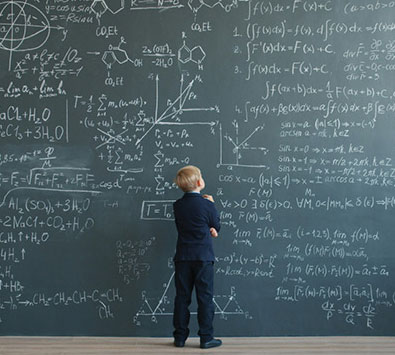
Few authors bring together history, science, and suspense as seamlessly as Dee A. Replogle Jr.
In his novel, The Prodigy, he takes readers into the final days of East Germany, where political turmoil, genetic experimentation, and a family’s fight for survival collide in a gripping thriller.
Drawing from his extensive travels in Germany, decades of involvement with medical research, and a distinguished legal career, Replogle crafts a story that explores both the promise and the ethical questions of human potential.
In this conversation with The Eden Magazine, Replogle shares the inspiration behind The Prodigy, his fascination with neuroscience, and the deeper themes of family, courage, and the extraordinary possibilities that lie within us.
What first inspired you to set The Prodigy during the dramatic final days of East Germany, and what drew you personally to that period of history?
My wife and I have visited Berlin 5 or 6 times, and I have always had a very strong interest in German history. About 4 years ago, she asked if I’d ever thought about writing a book about Berlin, probably assuming it would be a history of at least a portion of that city’s fascinating past. I thought a novel would be more fun and, since I had visited East Berlin in 1971 and found the DDR incredibly oppressive, I decided to center the book in the atmosphere of that sad era of Berlin’s history.
Peter is an extraordinary child whose intelligence becomes both a gift and a danger. What does Peter represent to you on a deeper human level?
Peter represents the almost limitless possibilities of neuroscience. Humans now know that all biological processes are subject to manipulation, if not outright control. The mind is an incredible organ. The manner in which thoughts are stored, retrieved, assembled, and expressed is, for want of a better term, miraculous. Many explain the construction of the brain as the product of intelligent design, and the more I studied neuroscience and its fascinating complexity, the more I agreed. It is simply not realistic, or mathematically possible, to ascribe that complexity to “chance.” We can tinker with those processes, quite possibly improve their speed and just maybe their efficiency, but we do so at our own peril. Man makes mistakes. God doesn’t.
Having traveled extensively throughout Germany, how did your experiences there influence the authenticity of the novel’s setting and characters?
I hope they informed that authenticity. I never wrote about any location I hadn’t visited, and the historical figures mentioned, i.e., Erick Mielke and Markus Wolf, were described as accurately as I could after reading a good deal about them, including an autobiography by Wolf.
Is there a personal experience that found its way into The Prodigy?
Nothing in the book mirrored anything I’d done personally. But when I visit someplace with historical significance, I almost always try to imagine what it would have been like to live in past times. Walking through the former headquarters of the Staatssicherheitsdienst (the “Stasi) and imagining what life would be like without the freedom of privacy made it easy to see why Friedrich Stossel never felt any loyalty to the State.
You have spent more than four decades serving on the board of a major medical research foundation. How did your interest in neuroscience and genetics shape the scientific foundation of The Prodigy?
All my life, I have had a profound interest in the mysteries of science. My service on the board of the
Oklahoma Medical Research Foundation has given that interest a more defined form and exposed me to numerous scientists who work every day to discover processes that can make our lives better. But when I became interested in neuroscience, an interest generated by reading about the structure of the brain, I found it the most interesting and absorbing subject I had ever encountered. As I said earlier, all biological processes are subject to manipulation and probable control. If that thought doesn’t stimulate your imagination and desire to learn more, I don’t know what would.
The novel explores the possibility of engineering exceptional intelligence. As scientific discoveries continue to accelerate, what ethical questions do you believe society should be asking today?
As I said, Man makes mistakes. Humans are fallible, and our mistakes can have lasting consequences. The ability to control thoughts and how they are formed raises the possibility of concentrating control of thought processes in a small body of persons. That means mistakes could become irremediable. Moreover, one of the greatest gifts we have today is the freedom of thought. It’s the source of our imagination and ingenuity. It fuels discovery, and discovery, particularly in science, can equate to progress. Limiting that freedom, whether through indoctrination or genetic engineering, is perhaps the greatest threat today to our way of life. The Revolutionary War adage “Don’t tread on me” is equally applicable to genetic engineering to the extent it seeks to adjust the way we think. I’m a huge advocate of making advances in the neuroscience of the mind, but those advances should be the result of a very careful analysis of the implications of any changes. A simple example is the very real possibility of increasing the speed or amount of information carried by neurotransmissions involved in the formulation of a thought. If information from one portion of the brain is accentuated, signals from other, probably more distant portions, may well be occluded. Those distant portions may be contributing important refinements or emotions, the absence of which could produce very undesirable consequences.
At its heart, The Prodigy is also a story about parents willing to risk everything for their child. What did you hope readers would take away from the family’s journey and sacrifices? I think all of us are moved by the sacrifices parents make on behalf of a child, and the greater the sacrifice, the greater the impact. When a father and mother work together to protect a child, their actions reflect the depth of their love for each other and for their child. I have been blessed with an almost idyllic marriage that has lasted almost 50 years. I know what it’s like to love and feel loved, and if a reader senses that mutual commitment in Friedrich and Ana Stossel, I hope it inspires them to strengthen their own matrimonial bonds. As for Peter, I hope readers understand that a child is not given to us, but entrusted to our care. Our actions should always be directed to helping our children become self-reliant, mature adults, with a strong sense of right and wrong.
The book combines historical events, suspense, science, and family relationships. Which of these elements was the most challenging and the most rewarding to write?
They were all challenging in their own way, but I would say describing family relationships and how those played out in different and increasingly threatening situations was the most rewarding.
Your professional career has been in tax and business law. What inspired you to step into fiction writing, and how has your legal background influenced your approach to storytelling?
Because the type of law I practice is completely fact-dominated, the ability to “make things up” was irresistibly appealing. Fiction beckoned. But my legal background also made it essential that I devote a good deal of thought to “thinking things out.” By that I mean: were the descriptions of events as realistic as a fiction writer could make them? The embryonic experiments were not true science, but the concepts were not unrealistic. Could an embryo be induced to change the manner in which thoughts are generated and transmitted? I don’t know. It’s certainly theoretically possible with genetics, but otherwise unlikely. Also, when describing places and historical events, it was very important for me to do so as accurately as possible (but maybe with just a tinge of poetic license when necessary).
The Eden Magazine celebrates stories that inspire reflection and personal growth. What message or insight do you hope remains with readers long after they finish the final page of The Prodigy? I hope they have a deep appreciation for what we have in America today: the freedom to think, express, and live our beliefs. But most of all, I hope they have a strong urge to learn more about Peter Stossel and will let me know that.




Comments